


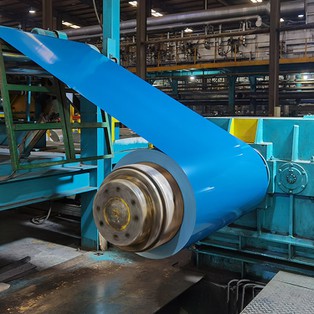
1. Q: What is galvanized color-coated printed steel coil? What are its applications?
A: Galvanized color-coated printed steel coil is a decorative color-coated product formed by transferring various patterns and designs onto the surface of galvanized or aluminized zinc steel sheet through a printing process. Its core characteristic is that it combines the strength of steel with the decorative appeal of printed patterns. It has a wide range of applications, including:
Construction: Interior and exterior walls, ceilings, partition walls, fire doors, sandwich panels, roof panels for light steel structure factories and villas, etc.
Home Appliances: Refrigerator, air conditioner, microwave oven, audio-visual equipment, and other appliance casings.
Furniture: Cabinet doors, wardrobes, bookcases, and other furniture panels.
Transportation: Automotive interior panels, ship bulkheads, etc.
Doors and Windows: Security doors, garage doors, door and window frames, etc.
2. Q: What are the main advantages of printed steel sheets compared to ordinary color-coated steel sheets?
A: The core difference between printed steel sheets and ordinary color-coated steel sheets lies in their processing. Color-coated steel sheets are simply coated, focusing on uniform protection and practicality; printed steel sheets, on the other hand, undergo secondary processing on top of the color coating, resulting in patterns and enhanced decorative appeal. Their main advantages include:
Highly Decorative: They can display various textures such as wood grain, stone grain, camouflage, floral patterns, and 3D designs. Colors and patterns can be customized to meet diverse aesthetic needs.
Steel Replaces Wood/Steel Replaces Stone: They retain the high strength, fire resistance, and moisture resistance of steel while achieving the decorative effect of precious wood or stone, at a lower overall cost.
Lightweight and Efficient: Printed steel sheets are significantly lighter than stone or solid wood, facilitating transportation and installation and greatly shortening construction time.
Green and Environmentally Friendly: Prefabricated houses made from printed steel sheets are recyclable, producing less pollution and aligning with environmental protection principles.
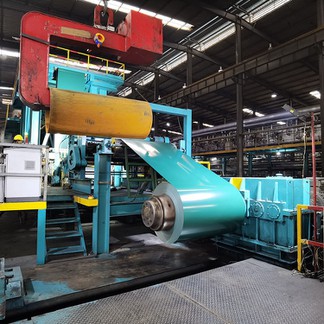
3. Q: How should the substrate and coating of the printing plate be selected? How do they affect its applicability?
A: The substrate and coating are key factors determining the applicability and lifespan of the printing plate. They should be selected appropriately based on the usage environment:
Substrate Selection:
Hot-dip galvanized substrate: The most commonly used, with good corrosion resistance, suitable for both indoor and outdoor use. For industrial and coastal areas, products with a zinc coating of 275 g/m² (double-sided) should be selected.
Aluminized zinc substrate: Contains 55% aluminum and 43.5% zinc. Under similar conditions, its lifespan is approximately four times that of galvanized steel sheets, making it particularly suitable for long-term outdoor exposure scenarios such as roofs and walls.
Electro-galvanized substrate: Good processing performance, suitable for the casings of household appliances such as air conditioners and washing machines, as well as interior decorative components. However, the zinc layer is relatively thin (approximately 20 g/m²), and its corrosion resistance is moderate.
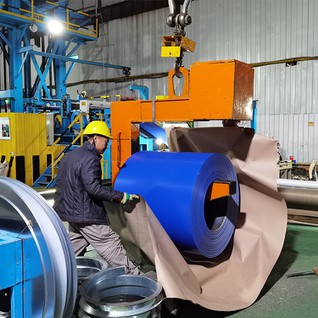
4. Q: Are printing plates suitable for outdoor use? How is their weather resistance?
A: Printing plates can be used outdoors, provided that a suitable substrate and coating system are selected.
Substrate Requirements: For outdoor use, it is recommended to use aluminized zinc substrate or high-zinc-plated hot-dip galvanized substrate (double-sided zinc plating ≥180g/m², ≥275g/m² in coastal areas).
Coating Requirements: The topcoat should be HDP (high weather-resistant polyester) or PVDF (fluorocarbon coating), and a "three-coat, three-bake" process is recommended. This involves applying a layer of transparent varnish as a protective layer after the primer and printing, which effectively enhances the coating's wear resistance, corrosion resistance, and UV resistance.
Precautions: For printing plates intended for long-term outdoor use, avoid using ordinary polyester (PE) coatings, as this may lead to problems such as loss of gloss, chalking, and fading. It is recommended to choose a reputable supplier and verify their production process and quality assurance.
5. Q: What are the key points to consider when selecting printing plates?
A: When selecting printing plates, it is recommended to consider the following aspects:
Consideration Dimensions | Specific Points
* **Substrate Quality:** Confirm the substrate type (hot-dip galvanized/aluminized zinc) and coating weight. For outdoor or high-humidity environments, prioritize aluminized zinc or high-zinc-layer hot-dip galvanized plates.
* **Coating System:** Prioritize products with a "three-coat, three-bake" process (primer + topcoat + printing + clear varnish). The coating thickness should meet standards (approximately 25μm for double coatings).
* **Printing Process:** Observe the clarity of the texture and the richness of the colors. High-end inkjet printing technology offers higher resolution and can achieve non-repeating, large-span patterns.
* **Applicable Scenarios:** For outdoor and heavy-duty protective scenarios, focus on the weather resistance of the substrate and coating; for indoor and decorative scenarios, pay more attention to the aesthetics of the pattern.