


Professional Guide to Weldability of ST14 Cold-Rolled Steel
ST14 steel is a low-carbon, extra-deep-drawing cold-rolled steel grade defined under DIN 1623 and EN 10130 standards. In industrial manufacturing, ST14 steel is widely recognized as extremely easy to weld - it offers stable, reliable, and high-compatibility weldability for almost all common welding processes, making it ideal for mass production in automotive, home appliance, electronics, and metal fabrication industries.
Why ST14 Steel Has Excellent Weldability
Ultra-low carbon content (≤0.08%)Low carbon minimizes the risk of hardening, cold cracking, and brittleness in the heat-affected zone (HAZ) during welding.
Strictly controlled impuritiesLow phosphorus (P ≤0.020%) and sulfur (S ≤0.030%) reduce hot brittleness, porosity, and weld defects.
Fine-grained microstructureControlled cold rolling and annealing create a uniform, soft microstructure that supports smooth fusion.
No special preheating requiredUnder normal thickness (0.3mm–2.5mm), ST14 can be welded directly without preheating or complex post-weld heat treatment.

Welding Processes Suitable for ST14 Steel
ST14 steel performs well with all commonly used industrial welding methods:
Spot welding & projection weldingMost widely used in automotive body parts and appliance shells; stable nugget formation, no cracking.
Resistance weldingHigh efficiency for mass production lines.
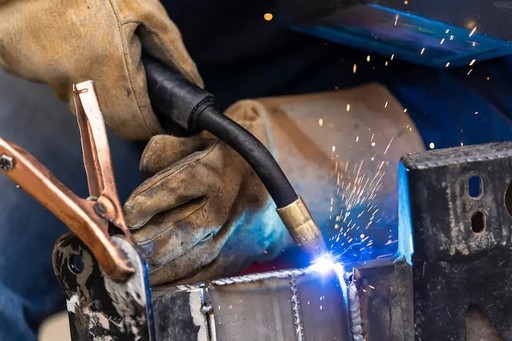
MIG / MAG weldingSmooth weld beads, good appearance, high strength.
TIG weldingIdeal for thin-gauge ST14 sheets requiring high cosmetic quality.
Laser welding & plasma weldingSuitable for high-precision components with small deformation.
Typical Mechanical Properties of ST14 Steel
| Property | Standard Value |
|---|---|
| Carbon Content (C) | ≤0.08% |
| Yield Strength | 140–220 MPa |
| Tensile Strength | 270–350 MPa |
| Elongation | ≥36% |
| Hardness | ≤57 HRB |
This combination ensures welded joints maintain good ductility and strength without becoming overly brittle.
Alternative Names, Standards, and Equivalents
| Standard Organization | Designation/Grade | Country/Region of Origin | Notes/Remarks |
|---|---|---|---|
| UNS | G10080 | USA | Closest equivalent to DC04 |
| AISI/SAE | 1008 | USA | Minor compositional differences |
| ASTM | A1008 | USA | Standard specification for cold-rolled steel |
| EN | DC04 | Europe | Deep-drawing quality steel |
| DIN | St14 | Germany | Equivalent to DC04 in European standards |
| JIS | SPCC | Japan | Similar properties but may differ in processing |
| ISO | 1008 | International | General equivalent with similar properties |
The table above highlights various standards and equivalents for St14 steel. While many of these grades are considered equivalent, subtle differences in composition and processing can affect performance. For example, SPCC (JIS) may have slightly different mechanical properties due to variations in manufacturing processes, which could influence the selection for specific applications.
Advantages of Welded ST14 Components
- Welded joints have high strength and good toughness
- Minimal deformation after welding, especially for thin sheets
- Low tendency for porosity, cracks, or inclusions
- Compatible with painting, electroplating, and coating after welding
- Stable performance in mass production lines
Frequently Asked Questions
1. Do I need special welding electrodes for ST14 steel?
No. Standard low-carbon steel welding wires or electrodes work perfectly with ST14.
2. Does welding affect ST14's formability?
Minor heat effects exist but are very limited. Proper process control ensures post-weld forming remains stable.
3. Can thin ST14 sheets be welded without burning through?
Yes. ST14's stable chemical properties allow precise low-energy welding, making it widely used for thin parts.
4. Is post-weld heat treatment necessary?
Generally not required for ST14 under normal application conditions.
ST14 steel is not only easy to weld but also one of the most weld-friendly deep-drawing steel grades on the market. Its low carbon, clean composition, and soft microstructure make it highly adaptable to automated welding environments and high-volume manufacturing.
GNEE's Partners
