


1: The thicker the zinc layer of the galvanized color-coated coil, the better the anti-corrosion performance?
Answer: Not necessarily. The thicker the zinc layer, the longer the time for red rust to appear on the substrate, and the longer the anti-corrosion life under the same corrosive environment. But the anti-corrosion performance also depends on the uniformity of the zinc layer, its adhesion, the quality of the passivation treatment and the blocking effect of the color-coated topcoat. If the zinc layer is too thick, resulting in reduced adhesion or brittleness of the zinc layer, the overall protective effect may be reduced.
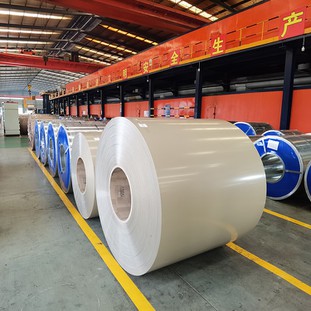
2: What are the negative effects of having too thick a zinc layer?
Answer: The main problems with excessively thick zinc layer are as follows:
Deterioration of processing performance: The thick zinc layer is prone to cracking or powdering during bending and stamping, which affects the appearance and anti-corrosion.
Difficulty in welding: Thick zinc layer will increase spatter and electrode pollution during resistance welding, making the welding strength unstable.
The cost increases significantly: the price of zinc is higher, the thickness of the zinc layer is doubled, and the cost of raw materials may increase by 20% to 30%.
Adhesion risk: The bonding force between the zinc layer and the substrate that is too thick may decrease, and there is a hidden danger of the zinc layer peeling off after long-term use.
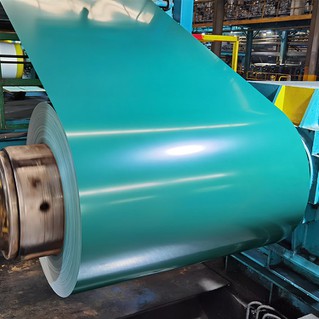
3: How to choose the appropriate zinc layer thickness according to the use environment?
Answer: The principle of "enough but not excess" should be followed:
Indoor dry environments (such as interior panels of furniture and home appliances): zinc layer 40~60g/m² (double-sided) is enough, mainly relying on color coating for anti-corrosion.
General outdoor environment (such as color steel tiles, fences): 80~120g/m² is recommended.
High humidity/industrial pollution/coastal environment: 150~180g/m² is recommended, or even higher (such as 200g/m² or more).
Heavy corrosion or long life requirements (such as chemical plants, seaside buildings): 180~275g/m² can be used, but thick coating or special coating system is required.
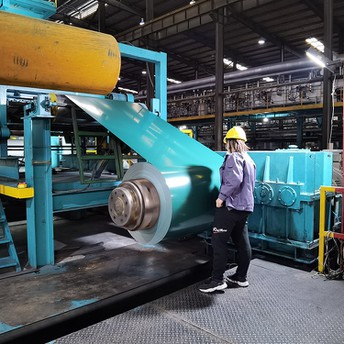
4: Are there any standards or specifications that set an upper limit for the thickness of the zinc layer?
Answer: Yes. Take the common national standard GB/T 12754 (color-coated steel plates and steel strips) as an example, which quotes the substrate standard GB/T 2518. Usually the thickness of the zinc layer is agreed upon in the contract by both parties, but it must meet:
An excessively thick zinc layer (such as exceeding 275g/m² on both sides) may fail to pass the standard 0T or 1T bending test, causing the coating to crack.
For color-coated coils, the matching of the zinc layer to coating curing and adhesion must also be considered during production. Many coating lines have upper limit requirements for the thickness of the zinc layer on the substrate (such as no more than 180g/m²), otherwise the pretreatment and baking processes need to be significantly adjusted.
In actual applications, the market supply of galvanized color-coated coils exceeding 200g/m² is small, and most of them are customized products.
5: On the premise of ensuring anti-corrosion, is there a more reasonable solution than simply thickening the zinc layer?
Answer: Yes. A better solution is "coating system collaborative design":
Zinc layer + high-quality passivation layer: Improve the resistance of the zinc layer to white rust, and still provide cathodic protection after slight scratches.
Zinc layer + high-performance primer: such as epoxy primer or polyurethane primer, which can greatly improve interface adhesion and barrier performance.
Zinc-aluminum-magnesium coating: Compared with pure zinc, the corrosion resistance is 2 to 5 times higher at the same thickness, and the incision has strong self-healing ability without excessive thickening.
Increase the thickness of the topcoat or choose a durable topcoat (such as PVDF, HDP): it is more economical and has better processability than simply thickening the zinc layer.