


1.How do the type and properties of coating resin affect the scratch resistance of color-coated panels?
Hardness and Abrasion Resistance: The harder the cured resin film, the better it resists scratches from sharp objects. For example:
Fluorocarbon resin (PVDF) and silicone-modified polyester resin (SMP) offer high hardness, stable molecular structures, and superior abrasion resistance after curing, surpassing ordinary polyester resin (PE).
Ordinary polyester resin (such as general-purpose PE) has a medium hardness, but may lack scratch resistance if used in applications subject to frequent friction.
Soft resins (such as certain acrylic resins) have a low hardness and, while flexible, offer poor scratch resistance and are prone to scratching.
Flexibility Balance: High hardness alone is not enough; the resin also needs a certain degree of flexibility. If the film is too hard and brittle, it may "break" (the coating peels off) when scratched. Moderate flexibility can cushion external forces through slight deformation, reducing the risk of scratches or peeling. For example, some modified polyester resins adjust their molecular chain structure to achieve a balance between hardness and flexibility, achieving both scratch and impact resistance.
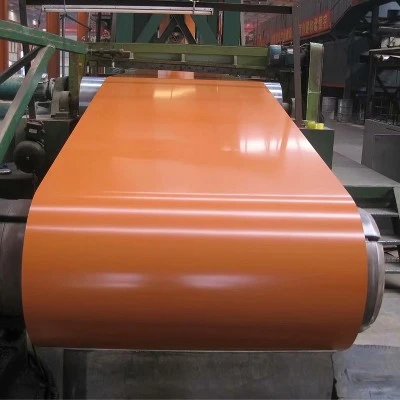
2.How do pigments and fillers in the coating affect the scratch resistance of color-coated panels?
The type, dosage, and dispersion of pigments (for color) and fillers (for performance) indirectly impact scratch resistance by affecting coating density and hardness:
Hard filler addition: The addition of high-hardness inorganic fillers (such as silica, alumina, and glass beads) to a coating is equivalent to adding "wear-resistant particles" to the resin film, significantly improving the coating's surface hardness and wear resistance. For example, some industrial, high-scratch-resistant pre-painted panels intentionally increase the proportion of silica filler to enhance scratch resistance.
Pigment/filler dispersion: If pigments or fillers are unevenly dispersed (agglomerate), localized "particle accumulation" can lead to uneven density in the coating. Agglomerated areas may have a loose structure and easily fall off when scratched, while areas without particles may lack hardness and be more susceptible to marking. Therefore, uniform dispersion is a prerequisite for stable scratch resistance.
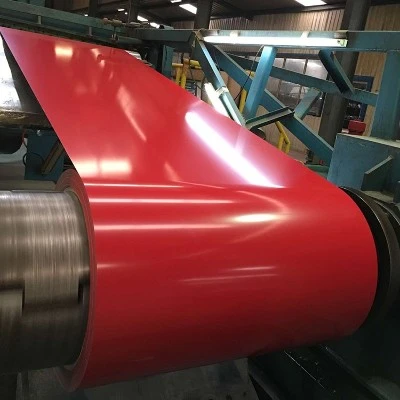
3.How do coating thickness and curing process affect the scratch resistance of color-coated panels?
Coating thickness: If the coating is too thin, the film's "protective layer" is weak, and even the slightest scratch can penetrate the coating (exposing the primer or substrate). However, thicker is not necessarily better. If the coating is too thick, uneven internal stress during curing can cause cracking or wrinkling, which in turn reduces scratch resistance (making the cracked areas susceptible to scratching). Typically, the topcoat thickness of color-coated panels ranges from 10-30μm (adjusted depending on the application scenario), requiring a balance between "sufficient protection" and "stable film formation."
Curing degree: The resin requires high-temperature curing to form a cross-linked structure (molecular chains interconnected into a network). If the curing temperature is insufficient or the curing time is too short, the resin will not be fully cross-linked, resulting in a low hardness and loose structure of the film, significantly reducing scratch resistance ("soft scratches" or coating peeling are likely to occur when scratched). If the coating is overcured, it may become brittle and prone to cracking during scratch resistance. Therefore, the curing process requires precise control (for example, the temperature profile of the continuous baking oven must be matched to the resin type).
4.How does surface treatment process affect the scratch resistance of color-coated panels?
Coating surface modification: This involves creating a dense surface layer through specialized processes (e.g., increasing the resin crosslink density) or introducing wear-resistant functional groups to enhance surface hardness.
Lamination: This involves applying an extremely thin, wear-resistant film (e.g., PET or PP) to the surface of the color-coated sheet. This acts as an additional "physical protective layer." When scratched, the film absorbs the force, minimizing damage to the coating. (This type of treatment is commonly used on color-coated sheets used in high-end home appliances.)

5.How to choose the appropriate coating type according to different scenarios?
For outdoor applications with high friction (such as building curtain walls, outdoor fencing, and containers): Highly scratch-resistant coatings such as fluorocarbon fiber (PVDF), silicone-modified polyester (SMP), or reinforced polyester coatings with hard fillers are preferred. A pencil hardness of 2H or higher is recommended.
For home appliances/indoor applications (such as refrigerator housings and furniture panels): If both appearance and scratch resistance are important, consider modified polyester coatings (pencil hardness 1H-2H) or pre-painted panels with a wear-resistant coating.
For low friction applications (such as interior decorative panels): Standard polyester coatings (pencil hardness HB-H) are sufficient; there's no need to pursue high scratch resistance to avoid increased costs.