


1.Can annealing eliminate work hardening?
During the initial rolling process, cold-rolled steel strip undergoes elongation and fragmentation of grains, generating numerous dislocations and internal stresses. This leads to increased hardness and decreased plasticity (i.e., "work hardening"), making the material both hard and brittle, unsuitable for direct further processing.
Annealing, by heating the steel strip above its recrystallization temperature and holding it at that temperature, causes the deformed grains to recombine and grow, forming new, uniform equiaxed grains. This process eliminates internal stresses and work hardening effects, restoring the steel strip to good ductility, plasticity, and toughness.

2.What impact does the annealing process have on mechanical properties?
By controlling the annealing temperature, holding time, and cooling rate, key mechanical properties of the steel strip, such as strength, hardness, and elongation, can be precisely controlled.
This allows manufacturers to produce substrates of different strength grades (such as CQ general commercial grade, DQ stamping grade, DDQ deep drawing grade, and HSS high-strength steel) to meet the material formability requirements of various application fields, from general construction to high-end home appliances and automotive parts.
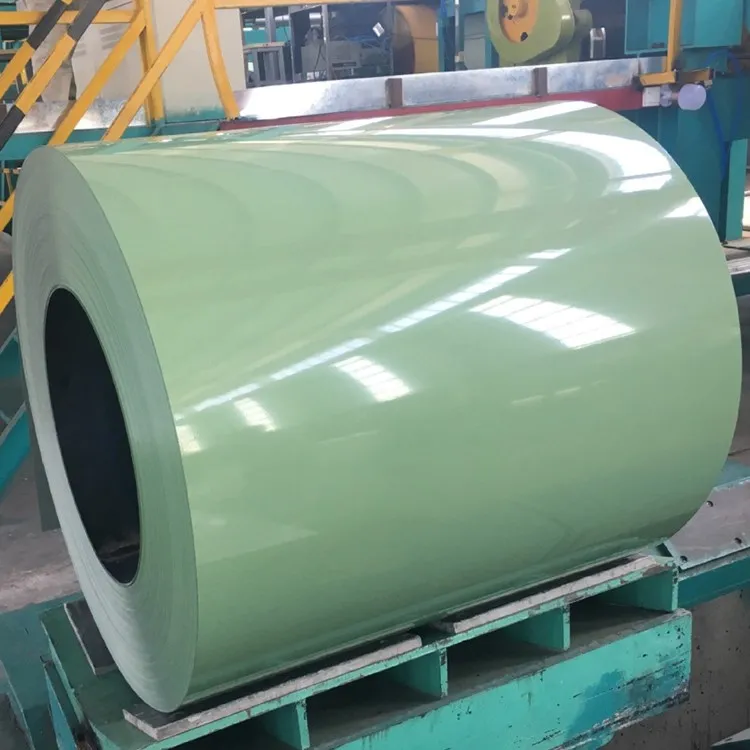
3.What effect does the annealing process have on improving the uniformity of microstructure?
Annealing makes the internal structure of the steel strip more uniform and stable. A uniform structure is the foundation for ensuring consistent material properties and uniform forming. If the structure is not uniform, cracks or inconsistent deformation are likely to occur during subsequent bending and stamping.
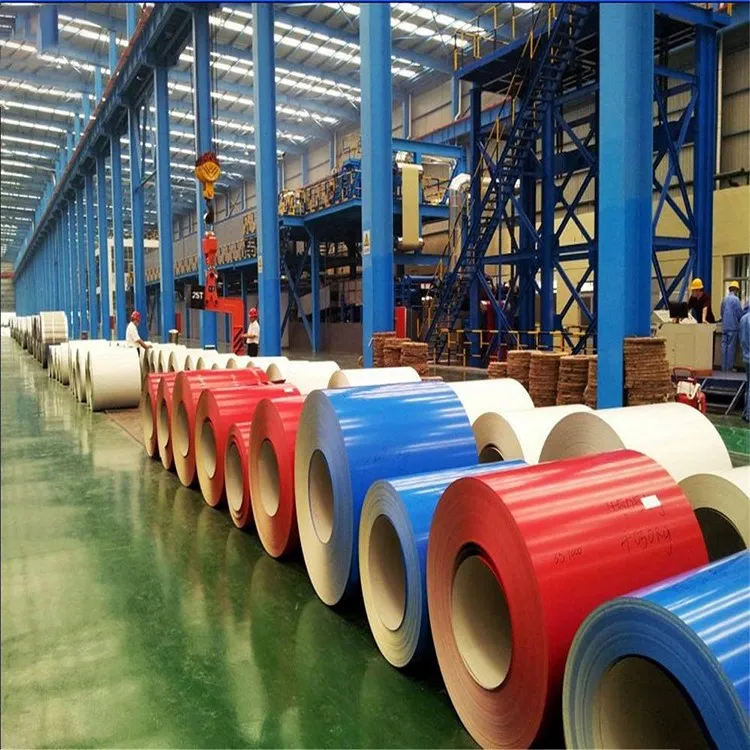
4.What impact does the annealing process have on surface treatment?
A clean, uniform, and moderately reactive metal surface is an ideal substrate for subsequent surface treatments (such as phosphating and passivation) and color coatings (spraying or roller coating).
Good annealing reduces surface defects and ensures the adhesion, uniformity, and durability of surface treatment layers and paint coatings. If the substrate has residual stress or uneven properties, problems such as cracking and peeling may occur after coating.
5.What is the production process for color-coated steel coils?
Annealing is a crucial step before cold-rolled substrates enter the color coating line (or as a pre-process). A typical simplified process is as follows: Cold-rolled steel strip → Cleaning → Annealing (in a continuous annealing furnace or bell furnace) → Cooling → Surface treatment (e.g., galvanizing, if it is a galvanized color-coated substrate) → Chemical pretreatment (phosphating, passivation) → Coating (primer, topcoat) → Curing → Finished color-coated coil.