


Q1: What is the biggest advantage of zinc-aluminum-magnesium (ZAM) coatings compared to traditional coatings?
A1: The biggest advantage of ZAM is that it simultaneously achieves superior corrosion resistance, self-healing of cuts, and a long service life.
Traditional coatings either focus on sacrificial protection or barrier protection, while ZAM, by adding elements such as aluminum and magnesium to zinc, forms a special coating that provides "active protection," comprehensively improving corrosion resistance and durability. In some corrosive environments, its service life can reach 20 to 30 years.
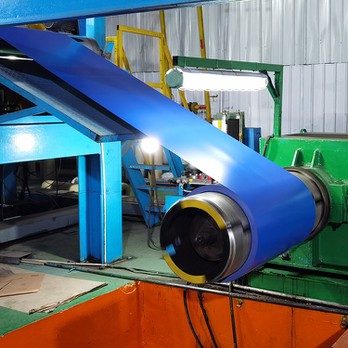
Q2: How strong is its corrosion resistance?
A2: Its corrosion resistance is a revolutionary improvement, far exceeding traditional coating products.
For example, compared to traditional hot-dip galvanizing (GI):
The corrosion resistance of zinc-aluminum-magnesium coatings is 5 to 10 times greater, and some high-performance products can even achieve advantages of 10 to 20 times.
With only about 275 grams per square meter of zinc-aluminum-magnesium coating, its corrosion resistance is comparable to that of 600 grams per square meter of traditional hot-dip galvanizing, achieving higher corrosion protection with a thinner coating.
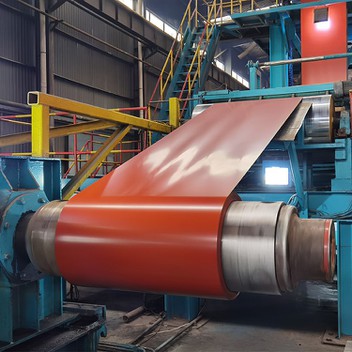
Q3: What is "self-healing" capability?
A3: "Self-healing" is one of the most unique and core advantages of zinc-aluminum-magnesium (ZAM) coatings.
When a steel plate is cut or scratched, the special chemical components in the coating (especially magnesium) react with the environment to automatically generate a dense and stable protective film at the exposed cut and scratch. This film effectively prevents further corrosion. This characteristic provides cuts with protection far exceeding that of GI and GL coatings, greatly extending the overall service life of the steel plate in complex environments.
Q4: What are its processing and welding properties?
A4: Zinc-aluminum-magnesium (ZAM) coatings possess both excellent processing and welding properties.
Processing: Due to its higher coating hardness (up to HV 250-400), it can withstand more complex stamping and bending forming than GI or GL coatings; for example, it can withstand 180° bending without cracking.
Welding: It retains good welding properties, well meeting the demands of modern manufacturing for efficient and precision machining.
Q5: In which fields is it most widely used, and how economical is it?
A5: Zinc-aluminum-magnesium alloy (ZAMA) has a very wide range of applications, especially in fields with stringent corrosion resistance requirements such as photovoltaic (PV) brackets, livestock farming, highway guardrails, and high-end warehousing.
In the PV bracket field, it can withstand high humidity, high salt spray marine environments, and harsh climates such as deserts, making it an ideal solution for achieving a service life of over 25 years.
In terms of economics, its advantage lies in its total lifespan cost:
Although the unit price of the material may be slightly higher, its extremely long lifespan and extremely low maintenance requirements result in lower costs in the long run.
In some applications (such as PV frames), costs can even be significantly reduced, with reductions ranging from 5% to 40%.