


How does large-coil, heavy-duty galvanized coil production improve efficiency and quality?
Large-coil production means fewer welds. On a continuous production line, each weld is a potential point of failure and a cause of production slowdown. Using large-coil raw materials significantly reduces the number of times the production line needs to stop for welding, thereby improving production continuity and reducing the risk of production line interruptions due to weld failures. At the same time, welding itself can affect the mechanical properties and surface quality of the strip steel, especially in the welding of high-strength steel grades, sometimes even resulting in scrap. Fewer welds help companies produce higher-quality products with more consistent performance.

How do larger coil weights help galvanized coil users improve material utilization and reduce costs?
For downstream users, the most direct benefit of larger coil weights is increased yield (i.e., the effective ratio from raw materials to finished products).
Reduced head and tail scrap: The beginning and end of a steel coil are weld areas, which are usually unusable and must be cut off as scrap. The larger the individual coil weight, the smaller the proportion of fixed loss from this cut-off portion relative to the total coil weight.
Avoiding entire coil scrap: If there are defects inside the steel coil, a small coil with severe defects may be scrapped entirely; however, with larger coils, defective sections can be cut off, and the remaining portion can still be used, significantly reducing metal loss.
Non-loss surface marking: Traditionally, steel mills print numbers on the surface of steel coils, requiring customers to cut off that section of material, resulting in waste. Now, companies like Sinosteel have achieved near 100% yield for larger coils by engraving the coil number on the binding strap, realizing zero loss due to marking.
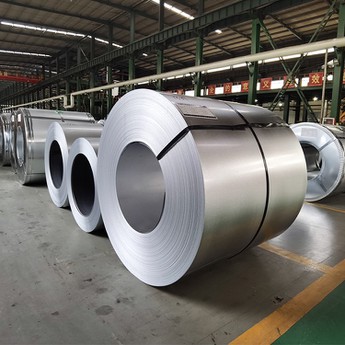
What benefits do large-coil weights bring to downstream processing?
Large-coil weights are designed to perfectly meet the continuous and automated production needs of downstream users.
Reduced downtime: The larger the weight of a single coil, the longer it can be used. This directly reduces the number of downtimes caused by coil changes and threading on continuous production lines such as stamping, cold bending, and pipe forming, translating the saved time directly into higher productivity.
Reduce splicing risks: Frequent splicing of small coils can lead to loose joints or weak points, while continuous large coils have no joints, ensuring the overall structural stability of the final product.
Optimized process parameters: A stable, continuous production line allows workers to maintain optimal process parameters, avoiding speed fluctuations and parameter readjustments caused by downtime and coil changes, thus ensuring consistency in product dimensions and performance.
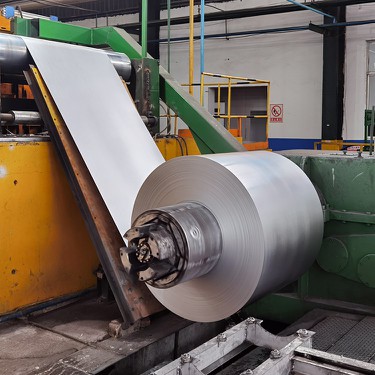
How does larger coil weight reduce logistics and packaging costs?
Larger coil weight offers significant advantages in terms of transportation and packaging per unit weight.
Savings in packaging materials: Packaging a 10-ton steel coil requires far less rust-proof paper, outer protective plates, and strapping per ton of steel than packaging ten 1-ton coils. This not only reduces material costs and procurement pressure but also meets environmental protection requirements.
Improved transportation efficiency: Under road or rail load restrictions, larger coil weight means each coil can carry more tonnage, effectively reducing freight costs per ton of steel. Fewer coils also optimize loading and unloading times, contributing to overall supply chain efficiency.
What issues should downstream users consider when choosing large coil weights?
While large coil weights offer significant advantages, downstream users need to consider their actual production conditions when making their selection.
Production line capacity matching: It is essential to confirm that the load-bearing capacity, coil inner diameter matching, and tension control range of equipment such as uncoilers, levelers, and feeders are compatible with the steel coil specifications to avoid equipment overload or damage.
Logistics and warehousing conditions: Large coil weights place higher demands on the lifting equipment (such as overhead cranes) and the ground load-bearing capacity of the storage area. If the equipment cannot handle large coils, or if space constraints lead to frequent coil turning, large coils can actually reduce efficiency.
Required coil weight for the production line: If the final components are small, the production batch is small, or the equipment can only handle racks of a specific capacity, then excessively large steel coils can create additional processes and costs associated with "uncoiling and slitting."