


Why do galvanized coils require surface treatment? What problems does it primarily solve?
While galvanizing effectively protects steel, its inherent properties make it somewhat delicate during transportation and subsequent processing. Surface treatment serves three core purposes:
Providing temporary protection to prevent "white rust": New galvanized layers are prone to oxidation in humid environments, forming a white powder or patches known as "white rust." Surface treatment acts like a "raincoat," isolating the steel from moisture and preventing white rust formation during shipping and storage.
Improving processing performance and reducing scratches: During processing (such as stamping and bending), the surface of galvanized sheets is easily scratched or cracked due to friction with the mold. Surface treatment (such as oiling) provides lubrication, improves forming performance, and reduces mold wear.
Imbuing special functions and increasing added value: For specific applications, surface treatment can also endow galvanized sheets with additional capabilities. For example, the "fingerprint resistant" treatment used on the casing of electronic products can prevent traces left by sweat during production or use; while the "phosphating" treatment can significantly enhance the adhesion of subsequent paint coatings.
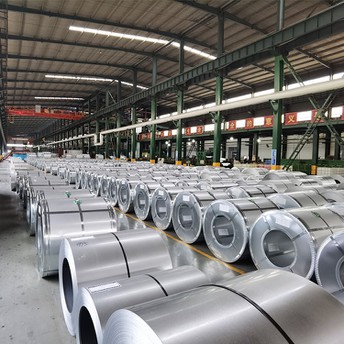
What are the most common surface treatment methods for galvanized coils?
Depending on function and application, the mainstream treatment methods can be categorized into five main approaches, as follows:
**Oil Coating Only:** This is the most common and basic treatment. A thin layer of rust-preventive oil is applied to the surface using an oiling roller or electrostatic spray, providing temporary moisture and scratch protection. It has good versatility.
**Chemical Passivation:** A dense chemical conversion film is formed on the zinc layer surface through a chemical reaction. Its corrosion resistance is stronger than simple oil coating and is usually combined with oil coating for double protection.
**Fingerprint Resistant Treatment:** On top of passivation, a transparent organic film is coated. This not only prevents rust but also makes the surface resistant to fingerprints and stains. It's a standard feature in the home appliance and electronics industries.
**Self-Lubricating Treatment:** This film combines corrosion resistance and excellent lubrication properties, making it particularly suitable for processing high-requirement parts that require deep drawing and complex forming.
**Phosphating Treatment:** A phosphate conversion film is formed on the zinc layer surface, greatly improving the adhesion of subsequent spraying, powder coating, and other processes.
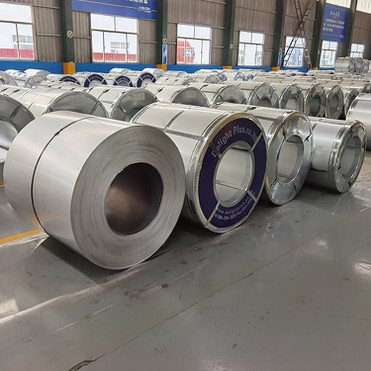
Both passivation and oiling are rust prevention methods, but what are the differences between them? How to choose?
Simply put, passivation is like putting a "bodysuit" on the galvanized layer, while oiling is like putting on a "raincoat." Their "waterproofing" mechanisms and effects are different.
Passivation: Forms a dense, water-insoluble conversion film on the zinc layer surface through a chemical reaction, which is a form of "chemical protection." Once formed, this film is relatively strong and not easily wiped off, providing some resistance to humid environments. However, the passivation layer may affect the performance of subsequent welding or painting.
Oiling: Physically adheres to the surface, forming an oil film to isolate moisture and oxygen, which is a form of "physical protection." It is inexpensive, versatile, and does not affect subsequent processing (it can be removed with cleaning agents), but the oil film is easily wiped off, and the protective effect weakens over time.
Choice Recommendation: If the use is short-term and there is a subsequent cleaning process, choosing "oiling only" is more economical; if long-term storage or export shipping in high-humidity environments is required, then the dual protection of "passivation + oiling" is a more reliable choice.
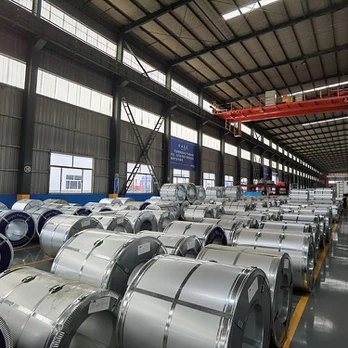
What impact will surface treatment have if welding or painting is to follow?
This is a crucial question, as improper surface treatment can have disastrous consequences.
Impact on Welding: Both oil films and passivation films are insulators, which can lead to unstable current during welding, resulting in defects such as spatter and porosity. Therefore, if welding is required, oiled products should be strictly avoided; products that are "untreated" or "passivated (confirmed not to affect welding)" should be prioritized.
Impact on Painting (Spraying/Powder Coating): For surfaces that require painting, oiling is also a major no-no. An oil film acts like a non-stick coating, making it difficult for subsequent paint to adhere and even causing it to peel off in large patches. The correct choice is "phosphating," which provides excellent paint adhesion. If oiled products are chosen, they must be thoroughly degreased with a professional degreasing cleaner before painting.
What environmental and storage factors should be considered when choosing a surface treatment?
"Choosing a treatment without considering the environment is time-consuming, laborious, and frustrating." You also need to carefully evaluate the following points:
Storage duration and transportation environment: If the product needs to be stored for a long time or transported by sea (high humidity, high salt spray), then the "chromium-free passivation + oiling" combination is the safest choice. For temporary storage in a dry room, only oiling is required.
Subsequent processing steps: As mentioned earlier, if there are subsequent welding or painting processes, it is essential to clearly communicate with the supplier and choose the most suitable surface treatment type; otherwise, the entire batch of products may be scrapped.
Environmental regulations: Traditional passivation solutions contain hexavalent chromium, which is harmful to the environment and human health. Nowadays, more and more industries (especially those exporting to the EU under the RoHS directive) require the use of chromium-free passivation products. Please be sure to confirm this when making your selection.