


Q: What are the fundamental differences in the working principles of hot-dip galvanizing and cold-dip galvanizing?
A: The principles are completely different. Hot-dip galvanizing, also known as hot-dip zinc plating, involves directly immersing galvanized coils, which have undergone pretreatment such as degreasing, pickling, and fluxing, into molten zinc at approximately 450 to 480°C. Through a metallurgical reaction, a zinc-iron alloy layer and a pure zinc layer are formed on the steel surface. This entire process is a chemical-metallurgical combination. Cold-dip galvanizing, also known as electroplating, utilizes the principle of electrolysis at room temperature. The galvanized coil is placed as the cathode in a zinc salt solution. When electricity is applied, zinc ions are deposited on the cathode surface to form a zinc layer. This is a physico-electrochemical deposition process and does not involve a high-temperature melting reaction. In short, hot-dip galvanizing relies on "immersion" and a "chemical reaction," while cold-dip galvanizing relies on "electricity" and "deposition."
Q: What are the differences in coating thickness and microstructure between the two processes?
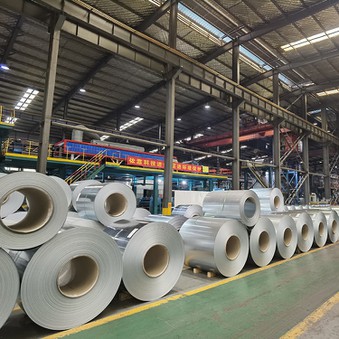
A: Hot-dip galvanizing produces a thicker coating, typically between 30 and 60 micrometers, and in special cases, exceeding 100 micrometers. More importantly, a zinc-iron alloy compound layer exists between the hot-dip galvanized coating and the steel substrate. This structure allows the zinc layer to firmly "grow" onto the steel surface, representing a metallurgical bond. Cold-dip galvanizing produces a thinner coating, with common industrial coating thicknesses ranging from 5 to 15 micrometers. In cold-dip galvanizing, zinc atoms adhere to the steel strip surface physically, without an alloy layer. Microscopically, hot-dip galvanizing has a thicker coating and higher bonding density, while cold-dip galvanizing lacks a supporting structure. This is the fundamental reason for the difference in their corrosion resistance.

Q: How significant is the difference in corrosion resistance and corrosion lifespan between the two processes?
A: Hot-dip galvanizing offers far superior corrosion resistance compared to cold galvanizing, by as much as tens of times. Hot-dip galvanizing produces a thick coating with an alloy layer, providing not only a physical barrier but, more importantly, cathodic protection. When the coating is partially damaged, exposing the steel substrate, the surrounding zinc, with its lower potential, corrodes preferentially, protecting the steel substrate from rust. This self-healing property greatly extends the protective lifespan. Electro-galvanizing, on the other hand, has a thin coating without an alloy layer. Once the coating is damaged, the steel substrate quickly oxidizes and develops red rust. In practical use, hot-dip galvanizing can remain rust-free for 10 to 20 years in harsh outdoor environments, while electro-galvanizing may rust within six months to a year under the same conditions. Even in dry indoor environments, electro-galvanizing only provides short-term protection.
Q: What are the characteristics of the appearance and cost of the two coating processes?
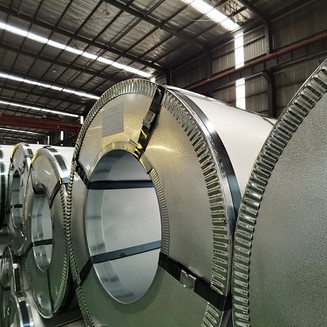
A: Cold galvanizing produces a bright, smooth surface with a uniform color. After colored or white passivation, it appears yellowish-green or bluish-white, offering good decorative properties and making it ideal for products with high appearance quality requirements. Hot-dip galvanizing produces a silver-gray surface with a slightly rougher feel, potentially showing traces of zinc flow or zinc flower crystals. Overall, it's not as refined as cold galvanizing, but the zinc flowers themselves indicate sufficient thickness. In terms of cost, each has its strengths: hot-dip galvanizing, due to its higher zinc consumption and energy consumption, has a slightly higher initial price than electro-galvanizing; however, from a life-cycle perspective, hot-dip galvanizing offers superior corrosion resistance and requires almost no maintenance, resulting in a lower overall long-term cost. Electro-galvanizing has a lower initial cost, but due to its shorter protection cycle, it requires frequent replacement or recoating of the protective layer, making it less economical in the long run.
Q: What are the respective applications of hot-dip galvanizing and cold-dip galvanizing? How should users choose?
A: Hot-dip galvanizing is suitable for projects involving long-term outdoor exposure, highly corrosive environments, and those requiring low maintenance costs. It mainly includes steel structures for buildings, highway guardrails, power transmission towers, communication facilities, chemical equipment, large-size fasteners, plumbing pipes, and other steel components used outdoors or in harsh environments. Cold-dip galvanizing is primarily suitable for dry indoor environments, applications requiring high surface aesthetics, and situations with limited budgets and short-term protection requirements. Typical products include appliance housings, electronic product accessories, chassis panels, instrument panels, furniture hardware, and small-size fasteners. The recommended choice is: if the product is mainly used outdoors, in coastal areas, or in highly corrosive environments such as chemical plants, hot-dip galvanizing should be prioritized; if the product is only used in dry indoor locations and has high requirements for surface gloss and uniformity, cold-dip galvanizing is a more suitable choice.