


Q: What is the continuous galvanizing process for galvanized coils? What are its core advantages compared to traditional batch galvanizing?
A: Continuous galvanizing refers to a method of large-scale production that involves continuously processing coiled steel strips at high speed through a series of steps, including annealing, zinc immersion, and cooling. Its core advantages lie in integration and high efficiency, consolidating previously separate processes such as annealing, cleaning, and galvanizing onto a single production line. Compared to traditional batch galvanizing, which processes all workpieces in batches, continuous galvanizing lines can operate around the clock, significantly increasing production speed and annual output-a qualitative leap from extensive to intensive assembly line operations. For example, advanced continuous galvanizing production lines can reach speeds of up to 180 meters per minute, enabling steel to be supplied on a large scale to various industries such as automotive, home appliances, and construction in a highly efficient and stable manner.
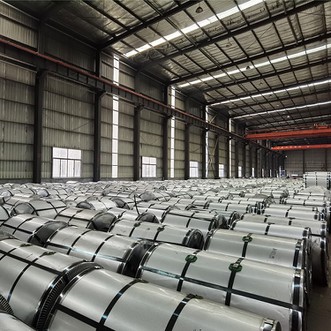
Q: How does the continuous galvanizing process achieve uniform coating and excellent product quality?
A: The continuous galvanizing process ensures product quality through extremely precise, fully automated control. In the cleaning section, a composite cleaning method combining physical, chemical, and electrolytic processes is used to provide a clean surface for galvanizing. Subsequently, segmented temperature control in the annealing furnace effectively ensures the uniformity of the strip temperature. In the critical galvanizing stage, a high-precision air knife controlled by a servo to blow away excess zinc precisely removes excess liquid zinc, resulting in a highly consistent zinc layer across the entire width and length of the strip. Many advanced production lines also incorporate visual inspection and AI algorithms to achieve closed-loop control, reducing the product defect rate to an extremely low level and ensuring a high-quality final product with a smooth surface and free of zinc spangle defects.
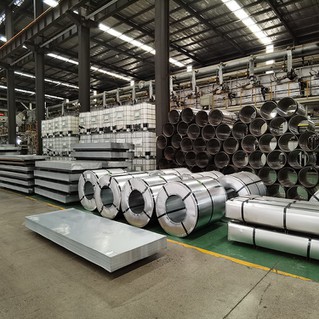
Q: What are the outstanding performances of continuous galvanizing technology in terms of energy conservation, emission reduction, and environmental protection?
A: Against the backdrop of increasingly stringent environmental regulations, continuous galvanizing technology has made significant progress in green manufacturing. Firstly, it allows for the integration of multiple advanced energy-saving measures. For example, by employing waste heat recovery technologies such as two-stage heat exchange and flue gas preheating, the high-temperature waste gas generated in the galvanizing process can be converted into production heat, saving up to 30% of fuel overall. Secondly, during the production process, the new zinc pot design effectively reduces temperature fluctuations in the main pot, reduces zinc dross generation, and lowers raw material losses and solid waste. Simultaneously, the supporting acid mist collection and zinc fume electrostatic dust removal devices achieve ultra-low emissions of particulate matter and sulfur dioxide, and the industrial water recycling rate can reach over 95%.
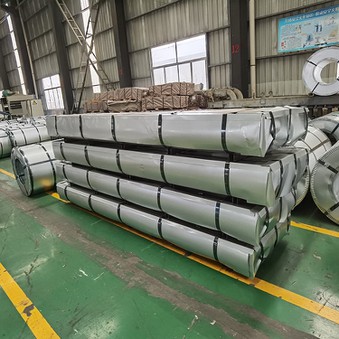
Q: What types of highly flexible product manufacturing and customized production can a continuous galvanizing production line achieve?
A: Despite being a mass production line, a modern continuous galvanizing production line possesses high flexibility, capable of meeting diverse customized needs. Regarding coatings, by adjusting the zinc bath composition, it can produce pure zinc coatings, zinc-iron alloy coatings (alloyed plates), and even higher-performance aluminum-zinc alloy coatings (such as Galvalume and Galfan), to adapt to different corrosion protection and processing requirements. Regarding coating weight, by controlling parameters such as air knife pressure, it can flexibly adjust from tens of grams to six hundred grams per square meter, achieving "differential thickness galvanizing" where the coating weight differs on both sides of the same coil of steel. Regarding steel substrates, the production line can cover various steel grades from ordinary strength to ultra-high strength steel, thus precisely meeting the stringent standards for material mechanical properties and surface quality required by different industries such as automotive and home appliances.
Q: How does the continuous galvanizing process bring significant economic advantages through the integration of equipment and processes?
A: The economic advantages of the continuous galvanizing process are mainly reflected in its high degree of integration and automation. From the raw material perspective, advanced design integrates pickling and galvanizing functions into the combined unit (PGL), directly producing galvanized products with cold-rolled precision from hot-rolled strip steel, significantly reducing investment and operating costs in intermediate stages. During production, automated systems for coil loading, welding, web guiding, and thickness measurement, combined with an intelligent production management system, greatly reduce manual intervention and operational errors. This end-to-end automated control significantly reduces the number of personnel on the production line, not only lowering labor costs but also significantly shortening production preparation and changeover times, increasing overall labor productivity by more than 50%, and reducing production costs by approximately 30%.