


S350GD+Z275 HDG Steel is a high-strength hot-dip galvanized (HDG) structural steel grade compliant with the European EN 10346 standard (material number 1.0529), specifically engineered for applications requiring exceptional corrosion resistance and load-bearing capacity-making it the preferred material for solar (photovoltaic, PV) brackets. The "S350GD" denotes its structural orientation and minimum 350 MPa yield strength, "+Z275" indicates a heavy hot-dip zinc coating of 275 g/m² (total both sides), and "HDG" confirms the hot-dip galvanizing process. Its unique combination of high strength, superior corrosion resistance, and excellent formability addresses the core pain points of solar bracket operation-long-term outdoor exposure, harsh environmental erosion, and structural load-bearing demands-making it the industry benchmark for PV支架 systems worldwide.
Solar brackets are the core load-bearing components of photovoltaic power plants, responsible for supporting solar panels, withstanding wind, snow, and seismic loads, and ensuring stable operation for 25–30 years (the typical service life of PV modules). S350GD+Z275 HDG Steel stands out among structural steels due to its tailored properties, perfectly matching the operational requirements of solar brackets. Unlike ordinary galvanized steel or low-strength structural steel, it balances strength, corrosion resistance, and processability, avoiding common issues such as bracket deformation, coating peeling, and premature rust that plague low-grade materials.
1. Core Definition of S350GD+Z275 HDG Steel
S350GD+Z275 HDG Steel is a specialized hot-dip galvanized structural steel, with each part of its designation conveying critical information about its performance and processing:
S: Stands for "Structural Steel", indicating its primary use in load-bearing structural components (such as solar brackets, building frames, and machinery parts).
350: Represents the minimum yield strength of 350 MPa (for thickness ≤3.0mm), meaning the steel can withstand a minimum of 350 megapascals of stress before permanent deformation-critical for supporting solar panels and resisting environmental loads.
GD: Denotes "Galvanized Structural Grade", confirming its suitability for hot-dip galvanizing and structural applications, with a microstructure optimized for strength and formability.
+Z275: Indicates the zinc coating specification: "+Z" means hot-dip pure zinc coating, and "275" refers to a total zinc coating weight of 275 g/m² (approximately 137.5 g/m² per side)-nearly twice the thickness of standard Z140 coating, providing enhanced corrosion protection.
HDG: Short for "Hot-Dip Galvanizing", the process of immersing the steel in molten zinc to form a dense, adherent zinc layer that acts as a barrier against corrosion-a critical feature for outdoor solar bracket applications.
Compliant with the EN 10346 standard, S350GD+Z275 HDG Steel is produced via controlled rolling and hot-dip galvanizing, ensuring uniform mechanical properties and coating adhesion. Its material number (1.0529) is a universal identifier for global procurement and quality verification, making it easy to source for international solar projects.
2. Key Properties of S350GD+Z275 HDG Steel
The properties of S350GD+Z275 HDG Steel are precisely optimized to meet the unique requirements of solar brackets, which operate in outdoor environments (exposed to sunlight, rain, snow, salt spray, and temperature fluctuations) for decades. Below are the core properties that make it ideal for PV applications:
2.1 Mechanical Properties (EN 10346, Longitudinal)
Solar brackets require high yield strength to support the weight of solar panels (typically 15–25 kg/m²) and resist wind loads (up to 1.5 kN/m² for rooftop PV) and snow loads (up to 2.5 kN/m² for ground-mounted PV). S350GD+Z275 HDG Steel's mechanical properties fully meet these demands:
|
Mechanical Indicator |
Standard Minimum Value |
Typical Value |
Relevance to Solar Brackets |
|---|---|---|---|
|
Yield Strength (Rp0.2/ReH) |
≥350 MPa |
360–400 MPa |
Prevents bracket deformation under panel weight, wind, and snow loads; ensures long-term structural stability |
|
Tensile Strength (Rm) |
≥420 MPa |
420–540 MPa |
Withstands tensile forces during installation and extreme weather (e.g., strong winds) |
|
Elongation at Fracture (A80) |
≥16% |
18–22% |
Enables cold bending, stamping, and roll forming into C/Z/U-shaped bracket profiles without cracking |
|
Impact Energy (0℃) |
≥27 J |
≥30 J |
Resists brittle fracture in low-temperature environments (e.g., winter snow loads) |
|
Cold Bend Performance |
180°, d=1.5t (no cracks) |
Passes 180° bend test |
Facilitates fabrication of complex bracket shapes (e.g., inclined supports, connecting pieces) |
2.2 Corrosion Resistance (Z275 Coating Advantage)
Corrosion resistance is the most critical property for solar brackets, as they are exposed to outdoor environments for 25–30 years. The Z275 hot-dip zinc coating of S350GD+Z275 HDG Steel provides dual protection against corrosion, addressing the key pain point of premature bracket failure:
Barrier Protection: The dense zinc layer (275 g/m²) forms a physical barrier, blocking oxygen, moisture, and corrosive substances (e.g., salt spray in coastal areas, acid rain in industrial zones) from reaching the steel substrate.
Cathodic Protection: Even if the coating is scratched during installation or use, zinc (more reactive than steel) acts as an anode, corroding first to protect the underlying steel-preventing rust in damaged areas and extending service life.
Test-Verified Durability: S350GD+Z275 HDG Steel undergoes strict corrosion testing: it resists red rust for ≥1,200 hours in a neutral salt spray test (5% NaCl solution, 35℃) and passes 200 cyclic corrosion test cycles (equivalent to 10 years of coastal use). Field tests in coastal areas show coating loss ≤30 g/m² after 2 years of exposure, with no red rust.
Service Life Alignment: The Z275 coating ensures a corrosion-resistant service life of 15–25 years, matching the 25–30-year service life of solar modules-eliminating the need for frequent bracket replacement and reducing maintenance costs.
2.3 Fabrication Properties
Solar brackets are typically fabricated into C-shaped, Z-shaped, or U-shaped profiles via cold bending, stamping, and welding-requiring the steel to have excellent formability and weldability:
Formability: S350GD+Z275 HDG Steel has good ductility and dimensional stability, allowing for precise cold forming into various bracket profiles (80–350mm height for C/Z/U sections) with tight tolerances (±0.05mm) via automatic roll forming machines. The zinc coating adheres firmly during forming, avoiding peeling or cracking.
Weldability: With a low carbon equivalent (CEV ≤0.48%), the steel can be easily welded via spot welding, CO₂ gas shielded welding, and arc welding-critical for assembling bracket components (e.g., columns, crossbeams, inclined supports). The zinc coating can be slightly ground at welding points to ensure weld strength, with no special preheating required for thickness ≤35mm at ambient temperatures ≥0℃.
Machinability: It can be easily cut, drilled, and punched with standard tools, ensuring high precision in bracket assembly-reducing production time and costs for PV projects.
3. Application of S350GD+Z275 HDG Steel in Solar Brackets
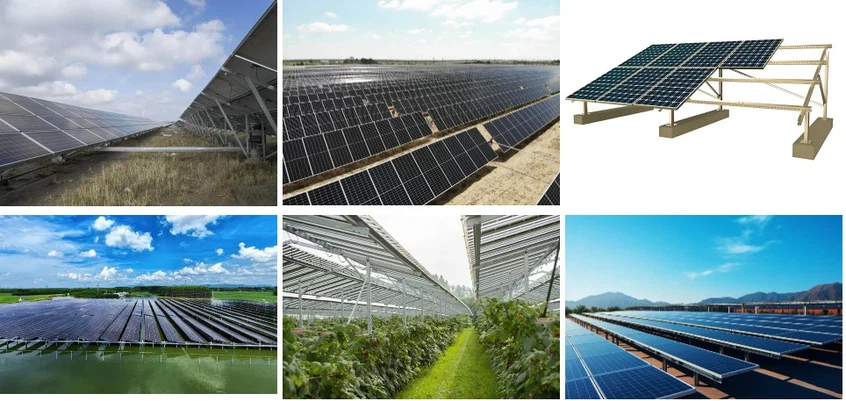
S350GD+Z275 HDG Steel is the gold standard for solar bracket materials, widely used in all types of PV power plants (rooftop, ground-mounted, floating, and coastal) due to its ability to adapt to diverse environmental conditions and meet strict load-bearing requirements. Below is its detailed application in solar brackets, including key components, application scenarios, and advantages over alternative materials:
3.1 Key Solar Bracket Components Made of S350GD+Z275 HDG Steel
Nearly all core load-bearing components of solar brackets are fabricated from S350GD+Z275 HDG Steel, leveraging its strength and corrosion resistance:
C/Z/U-Shaped Profiles: The most common components, used as crossbeams, purlins, and inclined supports. C-shaped profiles (80–160mm height) are ideal for rooftop PV檩条 and bracket columns, withstanding wind pressure up to 1.5 kN/m²; Z-shaped profiles (120–350mm height) feature a搭接式 design that improves longitudinal load capacity by 30%, suitable for large-span ground-mounted PV systems; U-shaped profiles (50–250mm height) are used for ground piles and track systems, with single-pile anti-pull force ≥8 tons.
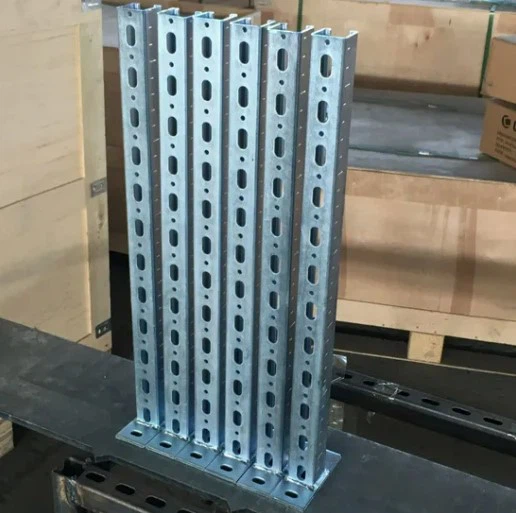
Support Columns: Used in ground-mounted and floating PV systems, supporting the entire bracket structure and solar panel array. S350GD+Z275 HDG Steel's high yield strength ensures the columns do not bend or deform under heavy loads, even in strong winds (up to 12-level winds) and storm surges.
Connecting Plates & Fasteners: Critical for assembling bracket components, these parts require both strength and corrosion resistance to avoid loosening or rusting. The Z275 coating ensures long-term stability, even in exposed areas.
Adjustable Supports: Used to adjust the angle of solar panels (optimizing sunlight absorption), requiring good formability and fatigue resistance-S350GD+Z275 HDG Steel's ductility and impact toughness prevent breakage during angle adjustment.
3.2 Application Scenarios in PV Power Plants
S350GD+Z275 HDG Steel's corrosion resistance and strength make it suitable for all types of PV projects, including harsh environments where ordinary materials fail:
Coastal PV Power Plants: The Z275 coating resists salt spray corrosion, a major threat to coastal structures. S350GD+Z275 HDG Steel's dual corrosion protection mechanism ensures brackets remain intact in salt-rich environments, avoiding premature rust and structural failure.
Ground-Mounted PV Power Plants: Exposed to rain, snow, and soil moisture, these brackets require long-term corrosion resistance. The Z275 coating and high strength of S350GD+Z275 HDG Steel withstand snow loads and soil corrosion, ensuring stable operation for decades.
Rooftop PV Systems: Lightweight yet strong, S350GD+Z275 HDG Steel brackets do not overload the building roof while providing sufficient support for solar panels. Its excellent formability allows for customization to fit different roof shapes (flat, sloped).
Industrial/High-Pollution Areas: Resists acid rain and industrial pollutants, ensuring bracket durability in areas with high air pollution. The dense zinc coating blocks corrosive gases from reaching the steel substrate, extending service life.
4. Global Equivalent Grades of S350GD+Z275 HDG Steel
|
Region |
Equivalent Grade |
Standard |
Key Matching Indicators |
Coating Compatibility (Zinc Weight) |
|---|---|---|---|---|
|
Europe (Reference) |
S350GD+Z275 |
Yield strength ≥350 MPa, tensile strength ≥420 MPa |
Z275 (275 g/m²) |
|
|
United States |
ASTM A653 Grade 80 (G90) |
Yield strength ≥350 MPa, tensile strength ≥448 MPa |
G90 (90 g/m² total, equivalent to Z140; Z275 available via customization) |
|
|
China |
Q355GNHd+Z275 / S350GD+Z275 (Baosteel Q/BQB 425) |
Yield strength ≥345–350 MPa, functional match for solar brackets |
Z275 (275 g/m²) |
|
|
Japan |
SGHC 440+Z275 |
Yield strength ≥340 MPa, compatible for solar bracket use |
Z275 (275 g/m²) |
|
|
Australia/New Zealand |
G350+Z275 |
Yield strength ≥350 MPa, high-strength structural grade |
Z275 (275 g/m²), zinc-aluminum alloy coating available |
Key Note: When substituting, ensure the coating weight matches the application environment (e.g., Z275 is mandatory for coastal PV projects). Chinese Q355GNHd+Z275 is a cost-effective alternative for Asian solar projects, with slightly lower yield strength (345 MPa) but sufficient performance for most PV bracket applications.
Frequently Asked Questions (FAQ)
1. What is S350GD+Z275 HDG Steel used for primarily?
It is primarily used for solar (PV) brackets, thanks to its high yield strength (350 MPa) and heavy Z275 hot-dip zinc coating. It is also used in other outdoor structural applications, but solar brackets are its most common and tailored use case.
2. Why is S350GD+Z275 HDG Steel ideal for solar brackets?
It addresses the two core needs of solar brackets: high load-bearing capacity (350 MPa yield strength resists wind/snow loads) and long-term corrosion resistance (Z275 coating ensures 15–25 years of service life, matching PV module life). It also has excellent formability for fabricating bracket profiles.
3. What does Z275 mean in S350GD+Z275 HDG Steel?
Z275 refers to a total zinc coating weight of 275 g/m² (≈137.5 g/m² per side), which is a heavy-duty coating that provides superior corrosion protection-nearly twice the thickness of standard Z140 coating. This is critical for outdoor solar brackets exposed to harsh environments.
4. Can S350GD+Z275 HDG Steel be used in coastal PV projects?
Yes, it is the preferred material for coastal PV projects. The Z275 coating resists salt spray corrosion, and the steel's high strength withstands storm surges and strong winds. It passes 1,200 hours of neutral salt spray testing without red rust, making it ideal for coastal environments.
5. What is the US equivalent of S350GD+Z275 HDG Steel for solar brackets?
The US equivalent is ASTM A653 Grade 80 (G90). Grade 80 matches the 350 MPa yield strength, while G90 (90 g/m² total zinc) can be customized to Z275 for enhanced corrosion resistance-suitable for US solar bracket projects.
6. How thick is the zinc coating of S350GD+Z275 HDG Steel?
The total zinc coating weight is 275 g/m², which translates to a thickness of approximately 39–40 μm per side (total 78–80 μm). This thick coating provides long-term corrosion protection for outdoor solar brackets.
7. Can S350GD+Z275 HDG Steel be formed into C/Z/U-shaped solar brackets?
Yes. It has excellent formability, allowing for cold bending, roll forming, and stamping into C/Z/U-shaped profiles (80–350mm height) with tight tolerances. The zinc coating adheres firmly during forming, avoiding peeling or cracking.
8. What is the service life of S350GD+Z275 HDG Steel solar brackets?
The Z275 hot-dip zinc coating ensures a corrosion-resistant service life of 15–25 years, which matches the 25–30-year service life of solar modules. This eliminates the need for frequent bracket replacement and reduces maintenance costs for PV power plants.