


1. What are the core factors affecting the thickness tolerance of galvanized coils?
The thickness tolerance of galvanized coils is not a fixed value; it is mainly determined by three factors:
Applicable product standards: Standards from different countries or regions (such as China's GB/T 2518, Europe's EN 10143, and the United States' ASTM A653) specify different tolerance requirements.
Nominal thickness: This is the most important influencing factor. Generally speaking, the thicker the steel plate, the larger the absolute value of the allowable thickness error.
Precision requirements: Under the same standard, there are often ordinary precision and high-precision (high-grade) precision grades. High-precision grades have narrower tolerance zones and stricter requirements.

2. What is the approximate thickness tolerance for ordinary precision galvanized coils according to the Chinese national standard (GB/T 2518)?
According to the Chinese national standard GB/T 2518-2019 "Continuously Hot-Dip Galvanized Steel Sheets and Strips," the ordinary precision (PT.A) tolerances for different thickness ranges are approximately as follows:
For thin sheets with a thickness of 0.50 mm or less, the thickness tolerance is typically controlled within ±0.04 mm.
When the thickness is greater than 0.50 mm but does not exceed 0.80 mm, the thickness tolerance is ±0.05 mm.
When the thickness further increases, within the range of 0.80 mm to 1.20 mm, the thickness tolerance is ±0.06 mm.
In addition, some traders and manufacturers commonly use thickness tolerance requirements of ±0.02 mm or ±0.03 mm in their published specifications, which usually represent a higher precision supply standard.
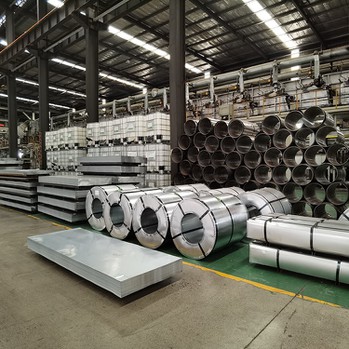
3. How are the thickness tolerances for galvanized coils specified according to European standard (EN 10143)?
European standard EN 10143:2006 is a commonly used European standard for dimensional and shape tolerances of hot-dip galvanized steel sheets. It applies to continuously hot-dip galvanized steel sheets with thicknesses ranging from 0.20 mm to 6.50 mm.
This standard does not use a single tolerance value, but rather provides a series of detailed permissible deviation values based on different combinations of nominal thickness and width. The determination of tolerances takes into account the product's thickness, width, and their combinations.
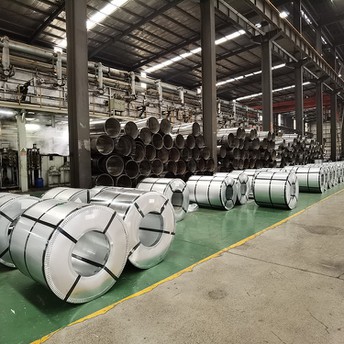
4. What unique requirements does the American standard (ASTM A653) have for thickness tolerances of galvanized coils?
Compared to GB and EN standards, ASTM A653 is more flexible in its thickness tolerance specifications. It does not provide a uniform, mandatory thickness tolerance table, but rather emphasizes that product tolerances should be determined based on the steel tolerance specifications of the cold-rolled base material. This means that the thickness tolerance of the final product usually needs to be clearly specified in the purchase order, contract, or agreement between the supplier and the buyer.
5. Besides standard tolerances, what other special provisions regarding the thickness tolerance of galvanized coils require special attention?
Product standards typically include special tolerance provisions for non-standard locations. For example, for steel strip supplied in coils, the thickness deviation within approximately 30 meters of the head and tail is allowed to be 50% larger than the standard value. Simultaneously, the allowable thickness deviation within approximately 15 meters of the weld area on the steel strip is also 60% larger than the standard value. When evaluating steel plate thickness, standards usually require that the measurement location be at least a specified distance (e.g., 25mm) from the edge of the steel strip to avoid measurement errors caused by edge effects.