


What are trimmed edges and burrs on galvanized coils? What are the differences in their appearance?
Answer: Trimmed edges refer to the edges of the steel strip being cut off using circular shears during the production or slitting process of galvanized coils, resulting in neat, burr-free edges with precise and consistent width. Burrs, on the other hand, are the natural edges of the original hot-rolled or cold-rolled strip without any trimming. These edges may be irregular, have slight burrs, or tiny cracks. In short, trimmed edges are smooth and dimensionally precise, while burrs have rough edges and larger width tolerances.
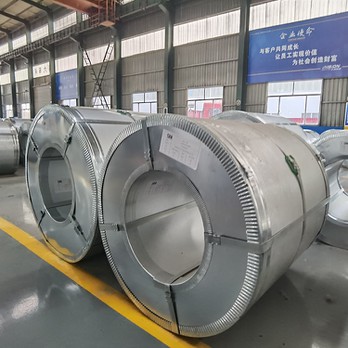
In what situations should be edge-trimmed galvanized coils be preferred?
Answer: When galvanized coils are used for demanding welding, painting, or deep drawing processes, edge-trimmed coils should be preferred. Edge trimming eliminates burrs and micro-cracks, preventing porosity or spatter during welding; the smooth edges facilitate even coating coverage and prevent edge corrosion; in applications requiring precise seams, such as automotive exterior panels and appliance housings, edge trimming ensures uniform joint gaps, improving the appearance and quality of the finished product.
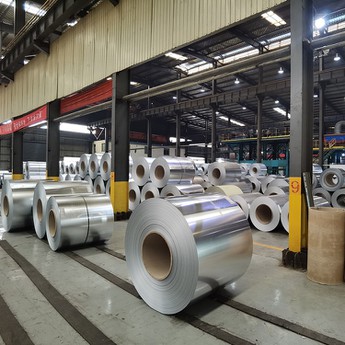
What are the advantages of using rough-edged galvanized coils? In what scenarios are rough-edged coils suitable?
Answer: The biggest advantage of rough-edged galvanized coils is their low cost, as the edge-cutting process is eliminated, reducing material waste and processing time. They are suitable for applications where edge quality requirements are not high, such as manufacturing corrugated sheets, ventilation ducts, cable trays, and simple shelving; or where subsequent processing will involve longitudinal slitting or secondary cutting, ultimately removing the edges; and for structural support components that are not aesthetically pleasing, where a small amount of burrs on the edges does not affect functionality.
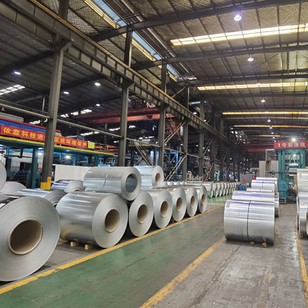
How does the choice between trimmed edges and burrs affect the edge corrosion resistance of the galvanized coating?
Answer: Trimmed edges expose the fresh steel substrate after shearing, and the zinc coating is interrupted at the cut surface. Without rust prevention treatment, this section is prone to developing red rust first. Burrs, on the other hand, retain the original coating coverage, resulting in a continuous zinc layer and theoretically better edge corrosion resistance. However, in practice, burr edges may contain micro-cracks or areas with poor zinc coating adhesion, which can also become corrosion initiation points. Therefore, for high edge corrosion resistance, it is advisable to apply edge protective wax or perform passivation treatment after trimming, rather than relying solely on the trimmed or burr edges themselves.
What technical and economic factors need to be considered when choosing between trimmed edges and burrs?
Answer: The main considerations are the following five points: First, the required width accuracy of the finished product. Trimmed edges can achieve a tolerance within ±0.5mm, while burrs typically have a tolerance of ±3~5mm. Second, subsequent processing techniques. Welding and automatic stamping are preferred for trimmed edges. Third, material utilization. Trimmed edges lose approximately 1%~3% of the edge metal. Fourth, cost budget. Burrs can save tens to hundreds of yuan per ton in processing fees. Fifth, delivery time. Trimmed edges require additional finishing processes, resulting in longer delivery times. Trimmed edges are generally chosen for high-quality, precision components or export orders, while burrs are chosen for low-end, high-volume, or internal non-critical applications.