


1.What are the common annealing methods depending on the process purpose and heating atmosphere?
Full annealing: The steel is heated to 30-50°C above Ac3 (for hypoeutectoid steel) or Accm (for hypereutectoid steel), held at this temperature, and then slowly cooled. This transforms the steel into a uniform structure of pearlite + ferrite (for hypoeutectoid steel), completely eliminating work hardening and significantly improving plasticity (elongation can be increased from approximately 10% after cold rolling to over 30%). This method is suitable for products requiring high plasticity (such as automotive stampings).
Incomplete annealing: The heating temperature is below Ac3, allowing only partial microstructure transformation, moderately reducing hardness while retaining a certain degree of strength. This method is suitable for applications requiring a balance between strength and plasticity.
Bright annealing: Annealing is performed in an inert gas (such as nitrogen) or vacuum atmosphere to prevent surface oxidation. After annealing, the surface maintains the smoothness of cold rolling (roughness Ra ≤ 1.6μm), eliminating the need for subsequent pickling. This method is commonly used for cold-rolled steel sheets for precision instruments and food packaging.

2.How to remove surface scale/stains?
If scale is present on the surface of hot-rolled raw material before cold rolling, or if surface contamination occurs during cold rolling due to equipment oil or rolling fluid residue, or if scale is generated during annealing (other than bright annealing), it must be removed by pickling to prevent it from affecting the surface quality during subsequent coating, welding, or use.
A common pickling process is hydrochloric acid pickling: the steel is immersed in a 10-20% hydrochloric acid solution (temperature 40-60°C). The scale (primarily composed of Fe₂O₃ and Fe₃O₄) reacts with the hydrochloric acid to form soluble chlorides (such as FeCl₂), which are removed with the solution. This also removes surface oil contamination (the thermal action of the hydrochloric acid, combined with surfactants, promotes emulsification and removal of oil contamination). After pickling, rinse with clean water to prevent residual acid from corroding the steel.
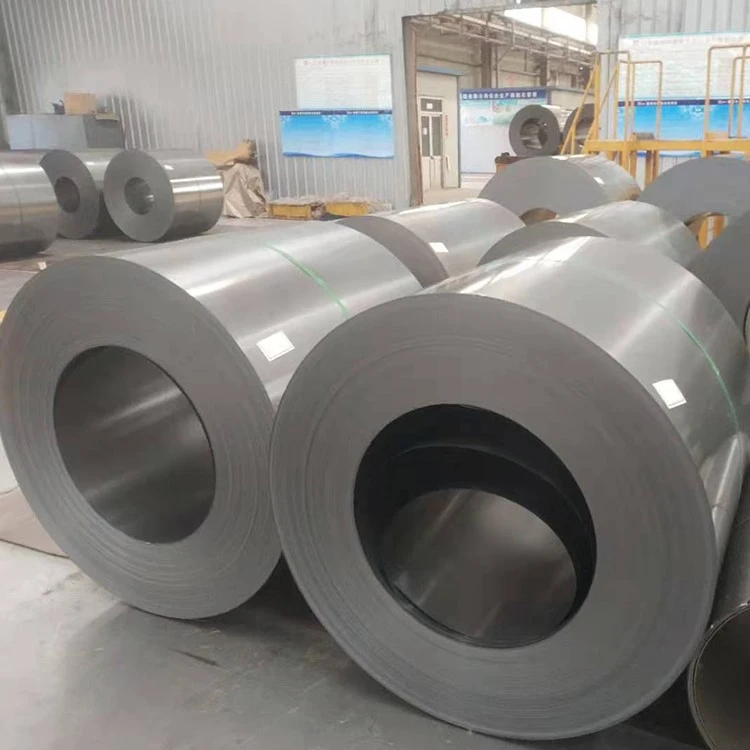
3.How to adjust the board shape and control the surface quality?
Correcting Steel Sheet Shape: The pressure of the skin-pass mill rollers (typically a multi-roller skin-pass mill, such as a 20-roll mill, allows for precise pressure control) flattens wavy and curved areas, ensuring uniform sheet thickness (thickness tolerance within ±0.01mm) and achieving standard flatness (e.g., bow ≤ 2mm per meter).
Adjusting Surface Roughness: The surface roughness of the cold-rolled steel is controlled by selecting skin-pass rollers with varying roughness (e.g., matte or smooth). If subsequent painting is required, a roughened roller can increase the surface roughness (Ra = 1.0-2.0μm) to improve paint adhesion; if a glossy finish is desired, a smooth roller can further reduce the roughness (Ra ≤ 0.8μm).
Stabilizing Mechanical Properties: Rolling with minimal deformation reduces "aging deformation" (the slow, minimal deformation that occurs slowly at room temperature after work-hardening) during subsequent use, ensuring dimensional stability. For example, after a skin-pass is completed, uneven deformation during stamping can prevent scrapping of automotive panels.
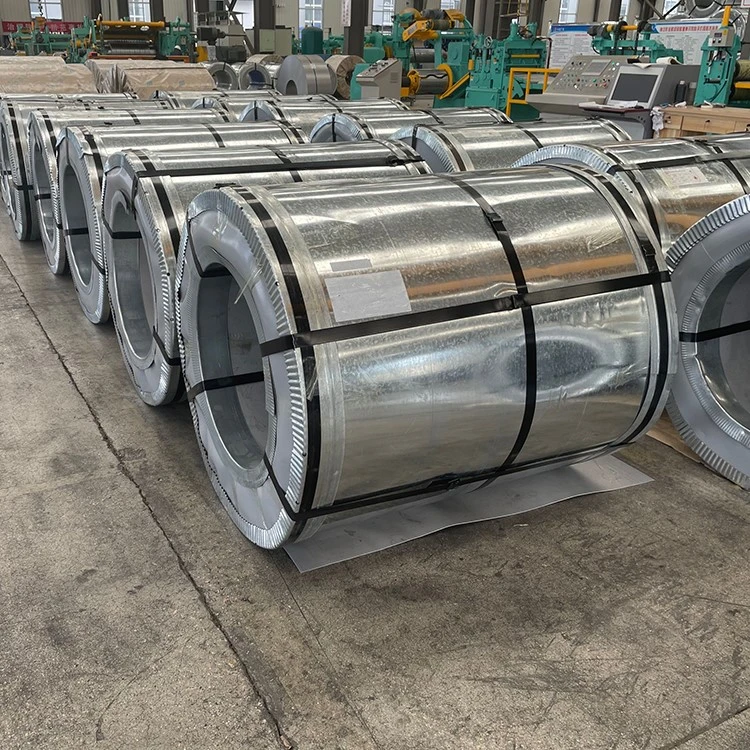
4.How to cut/strip?
Shearing: For flat sheet production, a transverse shear (cutting the steel coil widthwise into flat sheets) or a slitting shear (cutting the steel coil lengthwise into flat sheets) is used. Cutting accuracy must be controlled (tolerance ±0.5mm for length and ±0.1mm for width) to avoid burrs (burr height ≤ 0.05mm, otherwise it will affect subsequent assembly or use).
Slitting: For narrow strip production, multiple sets of slitting shears simultaneously slit wide steel coils into multiple narrow strips (e.g., slitting a 1250mm wide coil into five 250mm wide strips). After slitting, the narrow strips are coiled into small rolls (weighing 1-5 tons) for easy transportation and use.
5.How to improve surface protection/functional performance?
Galvanizing: Hot-dip galvanizing (immersing steel in molten zinc to form a Zn-Fe alloy layer followed by a pure zinc layer) or electroplating (electrolytically depositing a pure zinc layer) improves corrosion resistance (the corrosion resistance of galvanized steel is 5-10 times that of bare steel). It is commonly used for construction steel and automotive chassis.
Painting/Laminating: Applying organic coatings (such as polyester and epoxy paints) or composite films (such as PVC film) to the surface not only prevents corrosion but also imparts specific colors (such as white and gray) or textures (such as wood and stone grain). It is suitable for appliance housings (such as refrigerators and washing machines) and decorative steel.
Nickel/Chromium Plating: Electroplating nickel (for wear resistance and decorative effects) or chromium (to form a bright, hard chrome layer that resists wear and corrosion) is applied to the surface. It is used for precision machinery parts and hardware accessories.