


1. How to prevent scratches when hoisting galvanized coils?
Preventing scratches during hoisting of galvanized coils requires a comprehensive approach, including selecting the right lifting equipment, isolating contact surfaces, and adhering to proper operating procedures. The core principle is that the contact surfaces between the lifting equipment and the galvanized coil must be protected with flexible materials to avoid direct metal-to-metal contact. At the same time, good operating habits must be maintained, and rough handling should be avoided. Specific measures include: prioritizing the use of curved corrugated iron or specialized fiber slings instead of bare steel wire ropes for core-lifting; checking for protective pads on parts of the lifting equipment, such as plate clamps and C-hooks, that come into contact with the galvanized coil; and insulating each point where the lifting equipment and the galvanized coil may come into contact with each other by adding flexible materials (such as rubber pads or fiber sheaths) to prevent direct friction. Studies have shown that the speed of the installation robot should be controlled below 0.5 m/s. Excessive linear speed has led to a zinc layer damage rate increasing to 1.2%, while the adjusted damage rate can be reduced to 0.15%.

2.How to Protect the Inner Ring of a Galvanized Coil During Core-Piercing Lifting?
Core-piercing lifting is the most critical step in galvanized coil hoisting, and also the most prone to scratching the inner ring. When using wire ropes or slings to penetrate the inner core of the coil, the contact point between the lifting equipment and the edge of the inner ring is subjected to significant pressure, easily scratching the zinc layer or cutting the slings. Therefore, protective devices should be fitted to the corners of the inner ring of the coil. Commonly used are rubber corner protectors or circular sleeves with a metal outer sheath lined with rubber. Properly designed protective devices, such as semi-circular sleeves and support blocks, can effectively prevent direct contact and tearing between the slings and the corners of the inner ring of the coil, significantly reducing lifting bag costs and eliminating safety hazards. Another common practice is to use C-hooks with rubber anti-collision pads, with the inner ring of the coil secured to a matching annular step, thereby reducing scratches and side impacts.

3.How to Choose the Most Surface-Friendly Slings for Galvanized Coil?
Choosing the right sling material is the crucial first step in protecting the surface smoothness of galvanized coils. Metal slings, such as wire ropes or uncoated chains, are hard and rough, easily leaving fine scratches on the galvanized surface under high pressure. Therefore, flexible slings are strongly recommended. Flexible slings, woven from multiple layers of synthetic fibers, have a small bending radius and good fit, tightly wrapping the surface of the galvanized coil to prevent damage to the paint layer. The sheath can also be replaced separately, making them more suitable for protecting vulnerable parts. Furthermore, avoid slings that are too old or heavily soiled with oil, as dirt can scratch the galvanized surface during lifting. The contact area between the sling and the product should be kept clean, and slings should not be used interchangeably with those used for lifting ungalvanized steel.
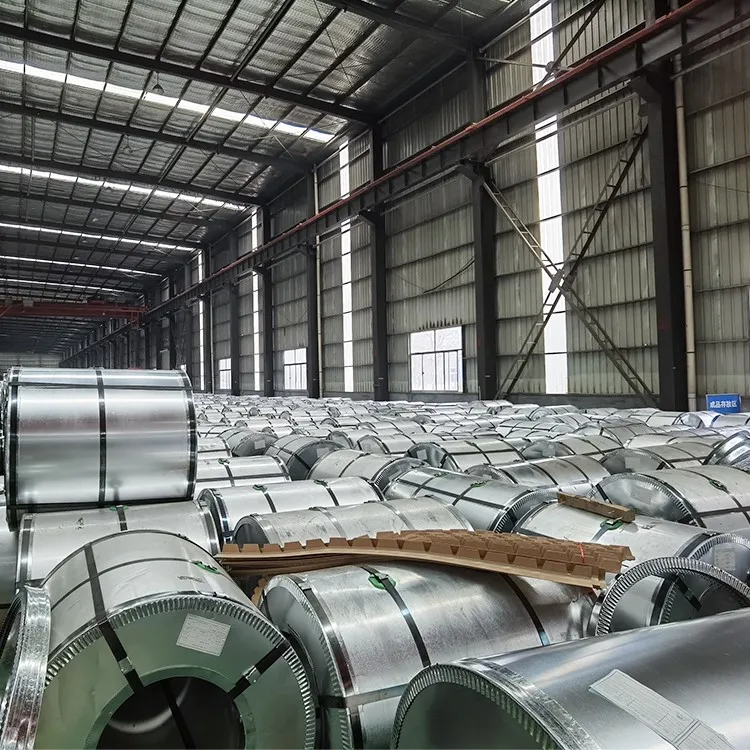
4. Can ordinary plate clamps or forklifts be used to lift galvanized coils?
It is not recommended to use ordinary plate clamps or forklifts because their metal fork teeth or jaw surfaces lack a soft material barrier, which will immediately cause fatal damage to the zinc coating. If a forklift must be used as an auxiliary tool, remedial measures can be taken, such as covering the forklift arms with rubber or plastic protective sleeves, or placing wooden strips, rigid foam, or other cushioning pads at the bottom of the pallet. At the same time, avoid directly hooking components with hooks or sharp tools to prevent scratching the zinc coating or causing localized deformation. When conditions permit, specially treated "damage-free plate clamps" should be used, whose jaws are specially treated to prevent any damage to the galvanized sheet during handling.
5. What should be done if galvanized coils are accidentally scratched during hoisting?
If the surface of a galvanized coil is found to be damaged during hoisting, immediate measures should be taken to repair the zinc layer to prevent the exposed steel from developing red rust upon exposure to air. If the damage is minor (scratches or wear on the zinc layer, but the steel substrate is not exposed), cleaning the damaged area and applying a specialized galvanizing repair agent and passivator will suffice. If there are deep scratches, severe peeling of the zinc layer, or the steel substrate is exposed, a more thorough remedial action is required: remove rust and loose zinc from the damaged area, and apply a zinc-rich coating evenly to the exposed area, applying at least two coats. Any new damage after hoisting operations should also be addressed promptly to prevent the spread of corrosion during subsequent transportation or processing.