


What is the main purpose of surface leveling of galvanized coils?
Answer: The main purpose of surface leveling of galvanized coils is to improve the straightness of the strip steel and eliminate slight waviness, edge ripples, or warping caused by the galvanizing process or coiling. At the same time, leveling can adjust surface roughness, providing a suitable surface condition for subsequent coating or deep processing. It can also eliminate tiny pores or zinc nodules on the surface of the galvanized layer, resulting in a more uniform and aesthetically pleasing appearance.

What equipment is typically used for leveling galvanized coils?
Answer: Two-roll or four-roll leveling machines (also known as finishing machines) are mainly used. Leveling machines are usually located in the finishing section of a galvanizing production line and consist of work rolls and support rolls. The strip steel is lightly rolled by a pair of rolls under a certain tension to achieve a smooth surface. Some production lines are also equipped with a wet leveling system, which uses leveling fluid to cool and lubricate the rolls and clean the surface.
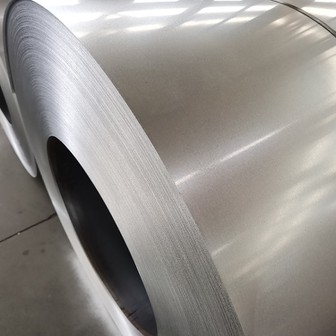
How to control the reduction rate during the leveling process?
Answer: The leveling reduction rate is generally controlled between 0.5% and 2%, which is considered light-reduction rolling. The specific value is set according to the thickness, strength, and target surface roughness of the galvanized coil. A constant pressure or constant position control mode is used, with precise adjustment of the roll gap via a hydraulic pressing system. Feedback signals from thickness gauges and tension meters are used for real-time adjustments to ensure uniform reduction along the entire length of the strip and avoid over-rolling that could damage the zinc layer.

What are the effects of leveling on the galvanized coating?
Answer: Proper leveling can make the galvanized coating bond more tightly to the steel substrate, closing and flattening the tiny pores in the coating, thus improving corrosion resistance. However, excessive reduction or poor roll surface condition may lead to cracking, peeling, or "zinc spangle crushing" of the zinc coating. Therefore, it is necessary to use rolls with appropriate roughness (such as EDM or laser texturing rolls) and control the rolling force to maintain the integrity of the zinc coating while achieving leveling.
What follow-up treatments are required after leveling?
Answer: After leveling, a stretching and straightening process is usually required to further eliminate residual internal stress and improve the sheet shape quality. Afterwards, the strip passes through a degreasing and cleaning unit to remove any leveling liquid or zinc powder adhering to the surface. Finally, depending on customer requirements, surface passivation, fingerprint-resistant coating, or oiling treatment is applied to prevent the cleaned surface from oxidizing or becoming contaminated during storage and transportation.