


What are the main features and common application scenarios of palletless packaging?
With its compact structure, it saves space and material costs and can be directly loaded into containers.
Scenarios with large transport volumes and less stringent requirements for stacking stability, such as centralized container transport.
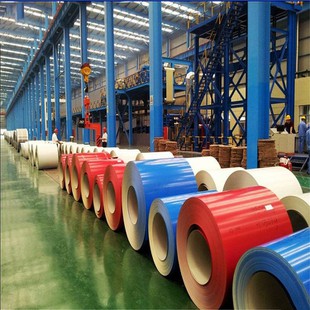
What are the main characteristics and common application scenarios of wooden pallet packaging?
For easy forklift loading and unloading, the steel coil provides a more secure hold and effectively isolates moisture from the bottom layer. Pallets typically require fumigation or heat treatment in accordance with the International Plant Protection Convention (IPPC) standards.
It is suitable for bulk carrier transportation or general scenarios that require frequent loading and unloading.
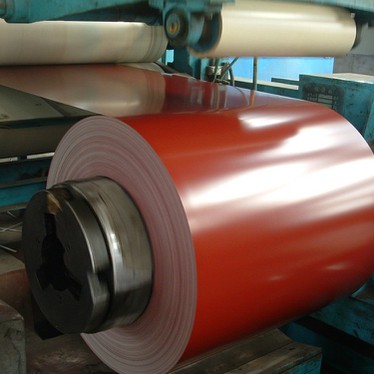
What are the main features and common application scenarios of vertical packaging?
The coil is fixed vertically upwards to the pallet. This effectively prevents the steel coil from rolling and deforming during transportation, reduces the contact area with hard objects, and better protects the coating.
This product is designed for precision or high-priced color-coated coils, and is especially suitable for customers with high requirements for surface quality.
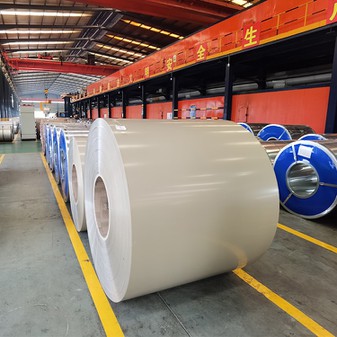
What are the main features and common application scenarios of horizontal packaging?
Placing the rolls horizontally is a more traditional packaging method, and the technology is mature.
A more economical option, suitable for transporting conventional steel coils.
What are the packaging structures?
First Layer: Rust-Proof Core: The inner layer uses vapor phase corrosion inhibitor (VCI) paper or film to tightly wrap the steel coil. The vapors from the VCI form a protective layer on the metal surface, blocking moisture and salt spray corrosion at the source.
Second Layer: Waterproof Barrier: Next, a high-strength waterproof plastic film or aluminum-plastic composite film is applied. This is the second core line of defense against moisture. Seams are tightly sealed with waterproof tape to ensure no moisture can enter.
Third Layer: Cushioning Protection: Paper or steel/plastic corner protectors are installed on the edges and inner and outer rings of the steel coil to prevent physical damage from bumps and collisions during transportation. Sometimes, pearl cotton or foam film is added under the corner protectors for additional cushioning protection.
Fourth Layer: Robust Armor: The outermost layer is a galvanized steel sheet or high-strength outer sheath, like a sturdy armor, wrapping the entire steel coil to resist impacts and abrasion during transportation. The entire package is secured with high-strength steel straps (usually four radially and at least three circumferentially).