


Q: What are trimmed edges and burrs on galvanized coils? How do they differ in processing methods?
A: Trimmed edges refer to the process of removing the edge portions of the strip steel during galvanized coil production using equipment such as disc shears. This results in a finished product with precise width and clean, burr-free edges. Burrs, on the other hand, are not trimmed at all, retaining the original rolled edge after cold or hot rolling. These edges may have irregular burrs, micro-cracks, or a rough texture. The key difference between the two processing methods is that trimmed edges involve an online shearing process, requiring higher equipment precision; burrs, however, skip this step and are delivered directly at the original width.
Q: What is the primary factor to consider when choosing between trimmed edges and burred edges?
A: The primary factors are the edge quality requirements of the final product and the subsequent processing methods. If the galvanized coil needs to be further slit, cross-cut into standard lengths, or used for welding pipes or manufacturing high-precision stamped parts, then trimmed edges must be chosen. This is because irregular burrs on burrs can jam slitting tools, affect welding quality, accelerate die wear, and even cause paint peeling during painting. Conversely, if the galvanized coil is used for applications where edge appearance is not critical, such as building roofing tiles, ordinary corrugated sheets, ventilation ducts, and fences, burrs are perfectly acceptable and can reduce production costs.
Q: From a cost and yield perspective, which is more economical, trimmed edges or burred edges?
A: Burred edges have lower costs and higher yields. Burred edges require no trimming and produce no edge waste, so the actual effective width of the galvanized coil is equal to the original rolled width, achieving 100% material utilization. It also eliminates the costs of trimming machine investment and maintenance, tool replacement, and energy consumption. Trimmed edges, on the other hand, remove approximately 5 to 15 millimeters from each side of the strip, resulting in a width loss of about 1% to 3%. This waste can only be recycled as low-priced scrap steel. Although trimmed products usually have a slightly higher selling price, from an overall material utilization perspective, burred edges are clearly more economical, especially suitable for high-volume, low-value-added products.
Q: How is the quality of the trimmed edges of galvanized coils judged? Does the presence of burrs pose a quality risk?
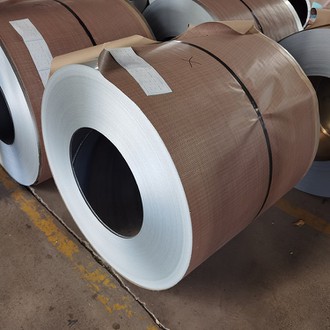
A: High-quality trimmed edges should meet three standards: first, the edges should be neat, without waves or serrations; second, the height of the sheared burrs should be less than the coating thickness, typically not exceeding 0.05 mm; and third, there should be no coating peeling or exposure of the steel substrate after trimming. Precision tool clearance and overlap adjustment are key to ensuring trimmed edge quality. The quality risk of burrs mainly lies in the possibility of residual stress cracks, minor laps, or zinc layer buildup due to edge thickening during galvanizing at the original rolled edge. These defects may become stress concentration points during subsequent use, leading to edge cracking or corrosion. Therefore, for products subjected to high stress or exposed to highly corrosive environments, trimmed edges should be used even at a higher cost.
Q: In actual procurement and application, how to specifically choose between trimmed edges and burrs? Please provide examples.
A: The specific selection strategy is as follows: First, for high-end applications such as automobiles, home appliances, color-coated substrates, and battery casings, trimmed edges are essential to ensure the stability of stamping, painting, and precision forming. Second, when making high-frequency welded pipes or cold-formed steel sections, trimmed edges are recommended if butt welding is required at the edges; if lap welding is used and the weld quality requirements are not high, burrs can also be used. Third, for galvanized coils used in construction, such as floor decking, roofing tiles, and gutters, burrs are perfectly sufficient, but trimmed edges are better if aesthetics are required and to prevent hand injuries from cutting. Fourth, if you need to cut the galvanized coils into narrow strips yourself, it is recommended to request the upstream supplier to trim the edges directly; otherwise, you will need to remove the burrs yourself during slitting, resulting in waste. It is recommended to clearly specify "trimmed edges" or "burrs" in the contract and agree on the allowable burr height or edge defect level.