


What internal defects are primarily eliminated during the annealing process of galvanized coils?
Answer: Annealing of galvanized coils primarily eliminates work hardening generated during cold rolling, releases residual stress within the steel, and promotes grain recrystallization, resulting in a more uniform and stable microstructure. This effectively prevents cracking or deformation caused by stress concentration during subsequent galvanizing.
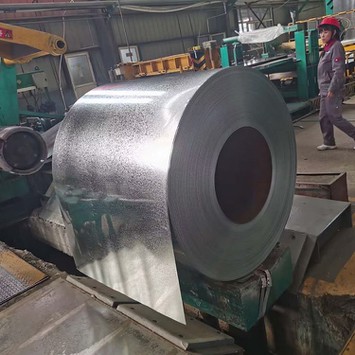
How does annealing affect the surface quality of galvanized coils?
Answer: Annealing removes iron oxide scale and oil from the steel strip surface through a high-temperature reducing atmosphere, resulting in a clean and activated surface. This facilitates the full reaction between the molten zinc and the steel substrate, forming a uniform and dense alloy layer. This significantly improves the adhesion and surface finish of the coating, reducing defects such as incomplete plating or peeling.
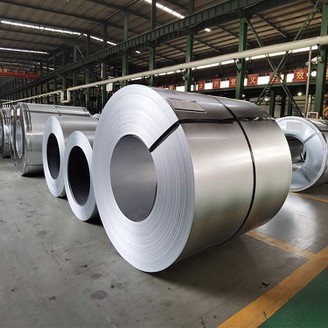
What specific improvements does annealing bring to the mechanical properties of galvanized coils?
Answer: Annealing reduces the yield strength and tensile strength of steel strips while increasing their elongation and plasticity. After annealing, the stamping and forming properties of galvanized coils are enhanced, facilitating subsequent processing into various complex shapes without causing cracking or uneven springback due to excessive material hardness.
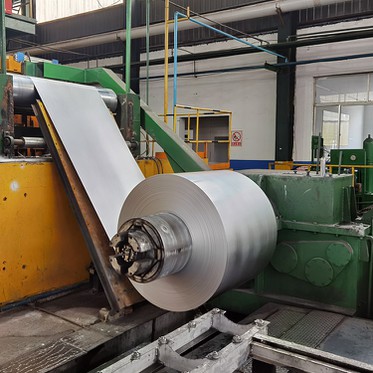
What role does annealing play in preventing "aging embrittlement" in galvanized coils?
Answer: Annealing effectively eliminates dissolved carbon and nitrogen atoms in the steel, reducing the increased internal friction caused by their slow precipitation at room temperature. This effectively inhibits aging embrittlement of galvanized coils during long-term storage or use, ensuring the material maintains stable toughness and impact resistance, and extending its service life.
Why must a protective atmosphere be used for annealing before galvanizing?
Answer: Annealing in a hydrogen-nitrogen mixed protective atmosphere prevents the steel strip surface from re-oxidizing at high temperatures and simultaneously reduces existing oxide films. If ordinary air is used for annealing, a thick oxide scale will form on the steel strip surface, severely hindering the zinc-iron reaction and preventing the formation of a high-quality coating. Therefore, annealing in a protective atmosphere is a crucial prerequisite for achieving good galvanizing quality.