


1. Why is the adhesion of galvanized coils generally poor, and what are the fundamental reasons to understand before enhancing adhesion?
The poor adhesion of galvanized coils stems primarily from two fundamental reasons. First, the zinc layer readily forms a dense film of zinc oxide, zinc hydroxide, or zinc carbonate in the air. This film is smooth and chemically inert, making it difficult for ordinary paints to spread and adhere well. Second, to prevent white rust, galvanized coils are usually passivated before leaving the factory. The passivation film further reduces surface energy, making it difficult for coatings to form mechanical anchors or chemical bonds. Therefore, the first step in enhancing adhesion is to confirm whether the galvanized coil has been passivated and to specifically remove or modify this barrier; otherwise, any subsequent coating will easily peel off in large sections.
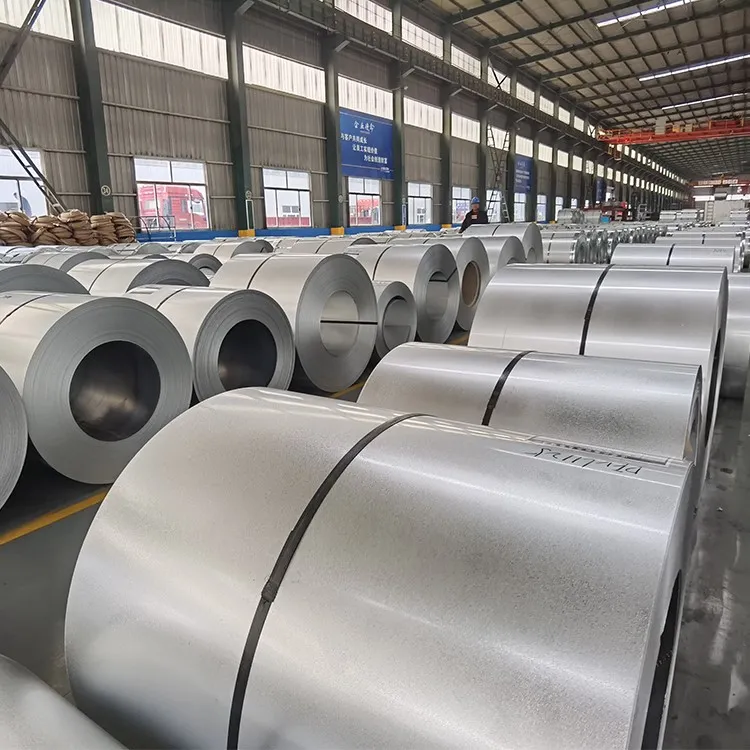
2. Why does physical grinding or sandblasting effectively improve adhesion? What precautions should be taken during operation?
Physical grinding or sandblasting increases the microscopic roughness of the galvanized coil surface through mechanical means, allowing the coating to embed into the tiny pits on the zinc layer surface, forming an "anchoring effect." Common methods include uniform grinding with 120-240 grit sandpaper, or sandblasting using low-pressure sandblasting (using non-metallic abrasives, such as garnet sand). There are three precautions to take during operation: First, the pressure should not be too high to avoid damaging the galvanized layer or even the steel substrate; second, after grinding, the surface dust and residual abrasive must be thoroughly removed with high-pressure air or a vacuum cleaner; third, coating should be applied as soon as possible after grinding, ideally within four hours, to prevent re-oxidation or contamination of the surface. After sandblasting, adhesion can be more than doubled compared to a smooth surface.
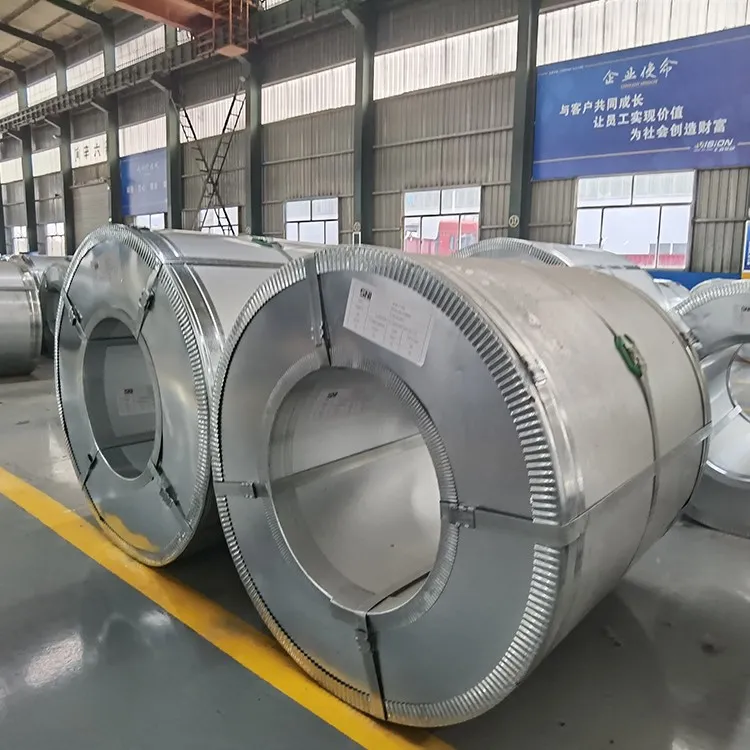
3. How to enhance adhesion using chemical conversion coating methods (such as phosphating or passivation as alternative treatments)? Which method is most recommended?
Chemical conversion coating involves generating a porous, rough inorganic salt layer, such as zinc phosphate, on the surface of galvanized coils through a chemical reaction. This layer acts as a "bridge," firmly bonding to the zinc layer at one end and containing micron-sized pores at the other, allowing the primer to penetrate and form a mechanical interlock. The most recommended method is "low-temperature zinc phosphating for galvanized parts," with a treatment temperature between 40 and 60 degrees Celsius and a treatment time of approximately three to five minutes. The resulting zinc phosphate crystals are columnar or leaf-shaped, significantly improving adhesion. For large workpieces that cannot be immersed, a brush-applied phosphating solution can be used, but the effect is slightly weaker. In contrast, traditional chromate passivation, while rust-preventing, does not improve adhesion and is not recommended for applications requiring recoating.
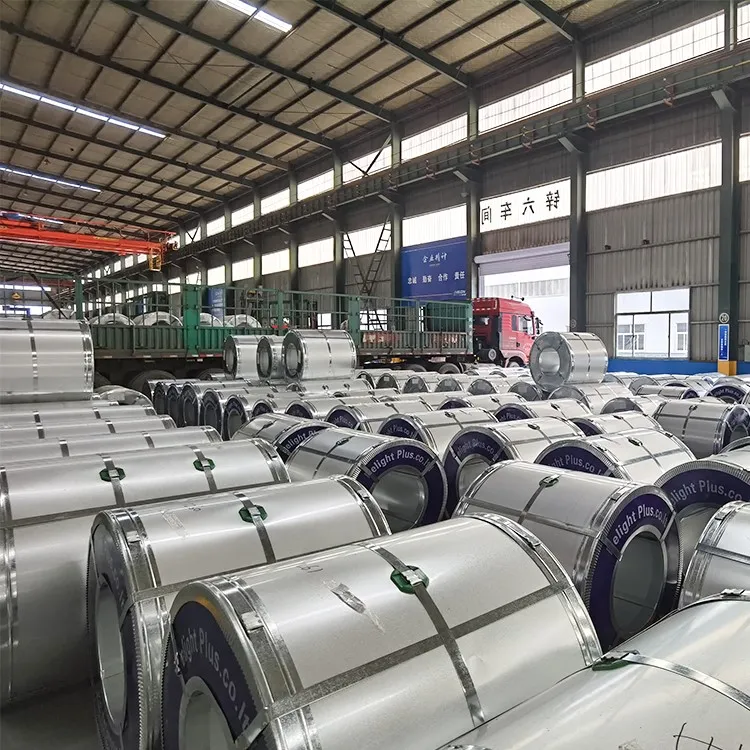
4. What type of primer or additive can directly enhance adhesion chemically?
If you don't want complex sanding or phosphating, you can choose a primer with special functional groups or add an adhesion promoter. The best primers are epoxy zinc yellow primer or epoxy zinc phosphate primer, which can form chemical bonds with the zinc layer and are especially suitable for galvanized substrates. Another simple and efficient approach is to add a special "galvanized sheet adhesion promoter" to a regular epoxy primer, at a dosage of 3% to 5% of the main paint volume, and stir well before use. These promoters usually contain phosphate esters or silane coupling agents, one end of which reacts with the zinc surface and the other end crosslinks with the paint film, significantly improving wet and dry adhesion. In some water-based baking paint systems, water-based silane coupling agents can also be used to achieve similar effects.
5. How to quickly verify or test the effect after enhancing adhesion?
The most common and reliable field testing methods are the "cross-cut adhesion test" and the "tape peel test." Specific procedures: Use a cross-cut adhesion tester to cut a grid with a spacing of 1 mm or 2 mm on the cured coating surface. The cut depth must penetrate the coating to reach the zinc layer. Then, apply a 1-inch wide pressure-sensitive adhesive tape (with an adhesion of approximately 10 Newtons per meter) to the grid area, press it firmly with an eraser or your fingernail, and then quickly tear the tape at a 60-degree angle. Evaluate according to ISO 2409 or ASTM D3359 standards: If the grid edges are completely smooth and undamaged, it is the highest grade, 0; if only a small amount of peeling occurs along the cut, with the peeling area not exceeding 5%, it is grade 1, which is also acceptable; if the peeling area is significantly increased or large areas peel off, the adhesion is unacceptable. For quantitative requirements, a portable pull-out adhesion tester can also be used. After the aluminum ingot is cured on the coating surface, it is pulled vertically, and the tensile force at failure is recorded. For galvanized coils with baked enamel coating, a strength of 5 MPa or higher is typically required.