


Q: What is the main purpose of annealing in galvanized coil production?
A: Annealing of galvanized coils has two main purposes. First, it restores the plasticity of the steel after cold rolling and eliminates work hardening. During the rolling process, cold-rolled strip steel suffers severe lattice distortion, resulting in increased strength and hardness but decreased plasticity. Annealing allows for recrystallization of the grains, reducing yield strength and hardness, increasing elongation, and facilitating subsequent forming processes. Second, it prepares a clean surface for hot-dip galvanizing. The annealing process is carried out in a protective atmosphere, which reduces residual iron oxide scale on the strip surface, obtaining a clean and activated iron matrix, ensuring good wetting and bonding of the zinc bath.
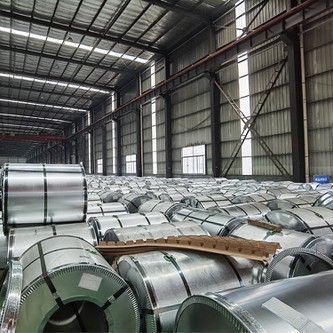
Q: How does annealing affect the adhesion and alloy layer structure of the galvanized coating?
A: The annealing process directly determines the iron-zinc reaction behavior during galvanizing. In continuous hot-dip galvanizing, the annealed strip is immersed in molten zinc at an appropriate temperature (approximately 460 to 480 degrees Celsius), where the iron substrate and zinc undergo a diffusion reaction to form an iron-zinc alloy layer. If annealing is insufficient or the furnace atmosphere is not properly controlled, an oxide film may remain on the strip surface, hindering the iron-zinc reaction and leading to incomplete galvanizing or poor coating adhesion. Properly controlling the annealing temperature and time can adjust the thickness and density of the iron-zinc alloy layer, ensuring sufficient adhesion while avoiding an excessively thick alloy layer that increases brittleness and causes powdering and peeling during processing.
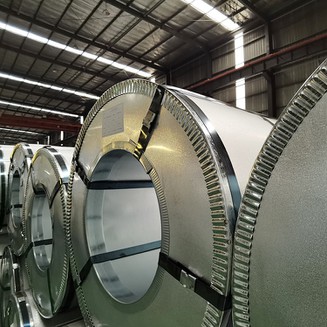
Q: What specific contributions does annealing make to the mechanical and processing properties of galvanized coils?
A: After recrystallization annealing, the grain structure of the galvanized coil changes from fine fibrous cold-rolled structure to equiaxed grains, and the dislocation density is significantly reduced. This leads to a decrease in the yield strength and tensile strength of the material, while significantly increasing the total elongation and uniform elongation. The work hardening index (n) and plastic strain ratio (r) are also optimized. Specifically, this results in less cracking during stamping, enhanced formability of parts with complex shapes, less susceptibility to cracking during bending, and reduced anisotropy of the material. This is crucial for producing parts requiring deep drawing, such as automotive body panels and appliance housings. Galvanized coils that have not undergone proper annealing exhibit severe work hardening and low formability limits, limiting their use to simple bending or structural parts.
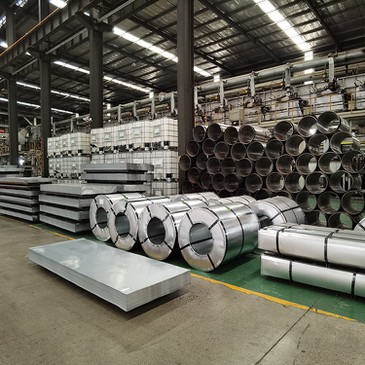
Q: What are the key control parameters typically involved in the annealing process in a continuous hot-dip galvanizing production line?
A: Continuous hot-dip galvanizing annealing furnaces are typically divided into preheating, heating, soaking, and cooling sections. Key control parameters include: the dew point of the furnace atmosphere (usually required to be below -40°C), the hydrogen content in the hydrogen-nitrogen mixture (5% to 10%), the temperature profiles of each section (heating section generally 700 to 850°C, soaking section 600 to 700°C, and the final temperature of the strip entering the zinc pot needs to be precisely controlled near the zinc bath temperature), and furnace tension control. Furthermore, the atmosphere and temperature at the furnace nose (the connection between the furnace and the zinc pot) must be stable to prevent the strip from re-oxidizing before entering the zinc bath. Modern production lines use mathematical models and closed-loop control to ensure temperature uniformity and atmosphere stability along the entire length of the strip.
Q: What typical defects or quality problems will occur in galvanized coils if the annealing process is improper?
A: Improper annealing can cause a variety of defects. First, insufficient annealing leaves residual iron oxide scale or oil on the strip surface, preventing the zinc bath from wetting it and resulting in exposed iron (uncoated) spots and streaks. Second, excessively high annealing temperatures or prolonged annealing times can lead to abnormal grain growth, resulting in low yield strength of the galvanized coil and making it prone to orange peel or slip lines during stamping; simultaneously, an excessively thick iron-zinc alloy layer can cause the coating to powder and peel off during bending. Third, a high dew point in the furnace atmosphere can cause the formation of an irreducible oxide layer (such as oxides of manganese, silicon, etc.) on the strip surface, ultimately resulting in poor coating adhesion and peeling during forming. Furthermore, an inappropriate cooling rate after annealing can affect the precipitation state of dissolved carbon atoms, thereby reducing the material's aging resistance and leading to age hardening during subsequent storage.