


1. How does the corrosion of galvanized coils differ between saline-alkali land and ordinary industrial areas or coastal regions?
This is a difference between a "double whammy" and a "single attack":
Ordinary industrial areas/coastal areas: Primarily salt spray corrosion containing chloride ions (Cl⁻, salt). This rapidly consumes the zinc layer, causing pitting corrosion.
Inland saline-alkali land: Not only does it contain high concentrations of salt (especially chloride salts), but it is also accompanied by strong alkalinity (high pH value).
The "1+1>2" effect: Alkalinity continuously "dissolves" the protective film on the zinc layer surface, directly exposing the underlying steel to the salt, thus triggering more severe electrochemical corrosion. Simultaneously, this strong electrolyte environment can cause grounding resistance to spike, posing a safety hazard.
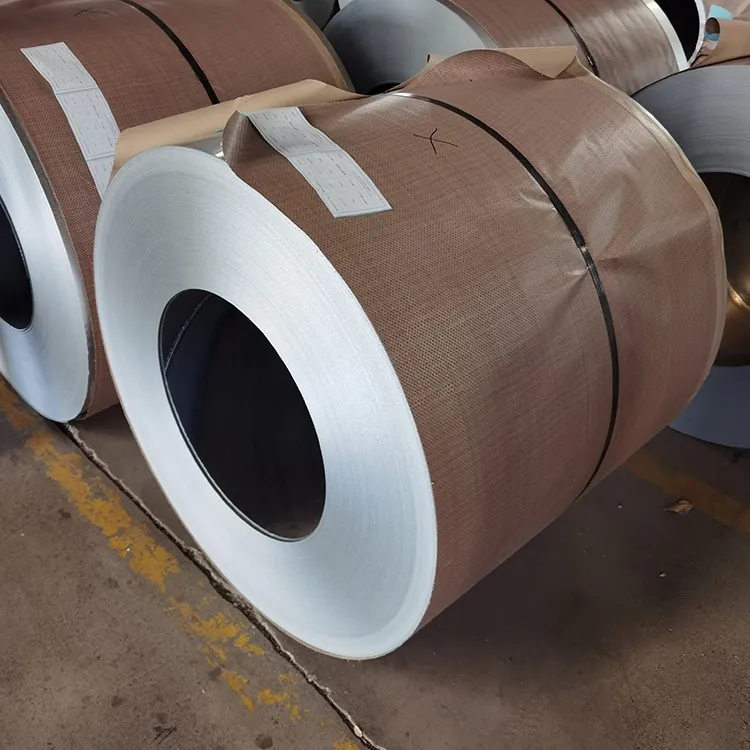
2.What is the actual service life of galvanized steel coils on saline-alkali soil? Can it last 20 years?
Generally, it's difficult. In saline-alkali environments, the standard zinc coating thickness is insufficient to provide reliable protection for a "20-year" long period:
Standard lifespan drops sharply: In normal neutral soils, the design life of galvanized steel can reach 20-30 years. However, in highly saline soils, this number will be drastically shortened to about 7-12 years.
Even shorter in extreme environments: In highly corrosive saline-alkali soils, its service life may even be only 5-10 years. An excessively thin zinc coating may fail within just 1-2 years.
Design lifespan comparison: A hot-dip galvanized steel sheet designed for saline-alkali soils has a salt spray corrosion resistance of approximately 10 years; while the lifespan of specialized stainless steel materials far exceeds this period.
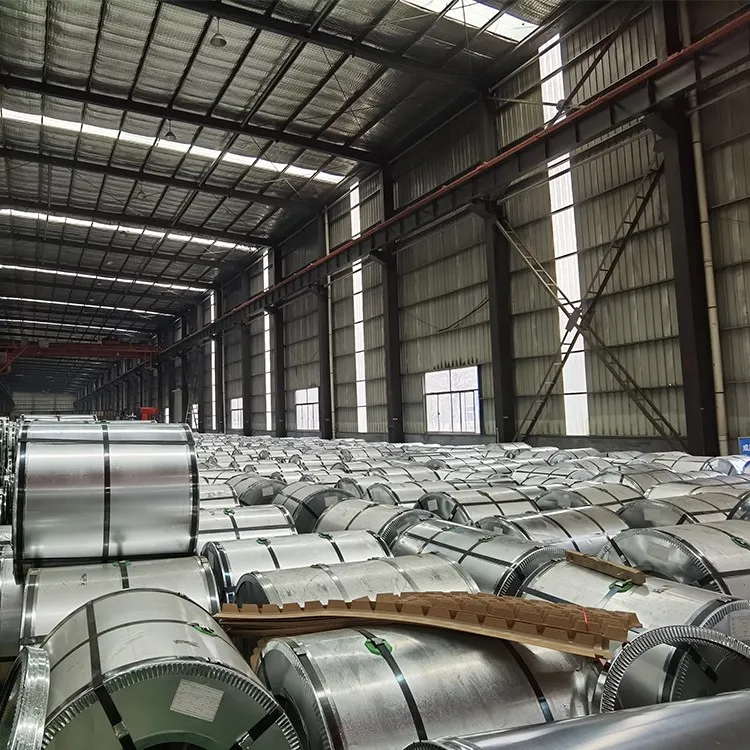
3.Why do galvanized coils fail so quickly in saline-alkali soil?
The core reason lies in the extreme electrolyte environment provided by saline-alkali soil, leading to three main failure modes:
Accelerated zinc layer consumption: Chloride ions (Cl⁻) in saline-alkali soil damage the protective film on the zinc layer surface, forming an "active-inert" galvanic cell, causing the zinc layer to be rapidly consumed.
Alkaline environment "assists": Excessively high pH values directly react chemically with zinc, accelerating its dissolution. It acts like a relentless catalyst, constantly "devouring" the protective zinc layer.
The consequence is "pitting" turning into "perforation": Corrosion first begins at tiny defects, forming pits (pitting corrosion). Over time, these pits rapidly develop into through-holes, causing instantaneous structural strength failure that is extremely difficult to repair.
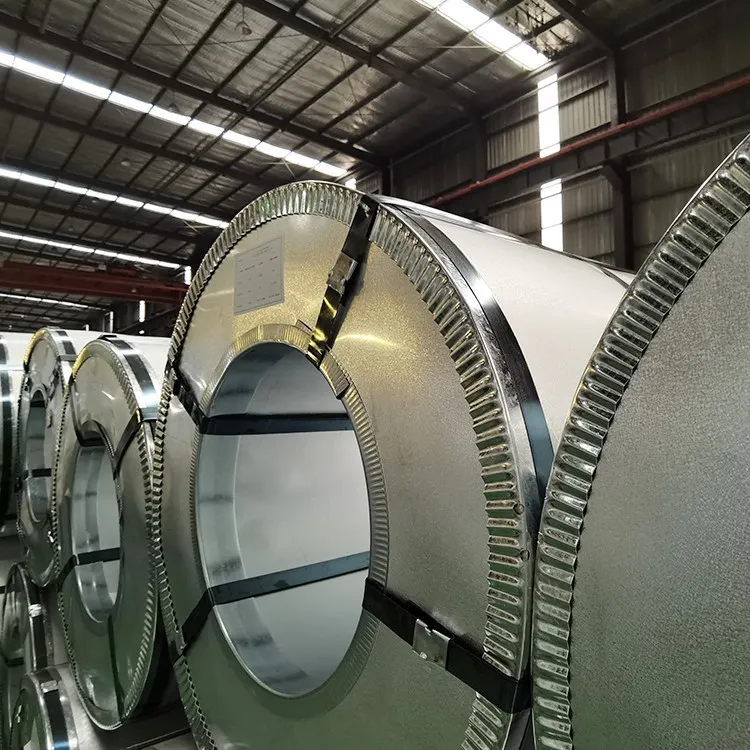
4. Are there alternative materials or enhanced protection solutions that are superior to ordinary galvanized coils?
Absolutely necessary, and there are solutions! Relying entirely on ordinary galvanized coils in saline-alkali soils is unwise. The following solutions are listed in order of protection level and cost from low to high:
Enhanced Solution (Thickened Coating): Doubling the thickness of the hot-dip galvanized layer from 60-100µm to 100-150µm. A thicker "shield" allows it to survive longer before being completely consumed.
Composite Solution (Dual Protection: Galvanized + Coating): Applying a thick layer of epoxy zinc-rich primer and a dense layer of polyurethane topcoat on top of the galvanized layer. This forms a double protection of "sacrificial anode + physical isolation," greatly extending its lifespan.
High-Performance Coating (Zn-Al-Mg): Using zinc-aluminum-magnesium (Zn-Al-Mg) alloy coated plates. Its salt spray resistance is 3-5 times that of ordinary galvanized plates. Even more remarkably, even when scratched, its unique "self-repair" mechanism automatically generates a protective film to seal the wound, making it particularly suitable for harsh environments like saline-alkali land.
Fundamental Replacement (Substrate Replacement): For critical structures, galvanized steel is abandoned in favor of 316L stainless steel. Its alloy oxide film, formed by chromium and nickel, fundamentally resists chloride ion corrosion, providing long-lasting corrosion protection in saline-alkali and coastal environments.
5. Besides the materials themselves, are there any special precautions to take during routine maintenance and installation?
Of course! Proper installation and maintenance are crucial. Here are three key points:
Prevent "wound infection": Avoid scratches, and welded joints must be repaired immediately and thoroughly with zinc-rich coating. When fabricating components, prioritize the use of stainless steel bolts to avoid faster electrochemical corrosion caused by potential differences.
Physical isolation is key: Physical barriers are the most direct method. All parts in contact with the ground must be fitted with rubber insulating mats; for all buried parts, such as supports, it is strongly recommended to wrap them with asphalt anti-corrosion tape or cover them with PVC pipes.
Regular "washing" is important: Salt accumulation on the surface forms an electrolyte solution, continuously causing "slow corrosion." In saline-alkali areas, the steel surface should be regularly rinsed with clean water, especially to remove accumulated dust and bird droppings. This effectively washes away corrosion sources.