


1. Why do galvanized coils "age" rapidly at high temperatures? What is the failure mechanism?
The "aging" of galvanized coils at high temperatures is not the surface oxidation and yellowing that people usually imagine, but a more thorough structural destruction, mainly driven by two mechanisms:
Accelerated oxidation and kinetic diffusion: At high temperatures (especially above 200°C), the galvanized layer not only oxidizes at twice the rate, but its internal alloy layer structure also undergoes fundamental changes. Zinc atoms diffuse unidirectionally from the outer free layer to the inner iron-zinc alloy layer, forming numerous tiny "voids" between them.
The "Kirkendall effect" leads to physical peeling: This "territory-grabbing" atomic diffusion causes the voids to expand continuously, eventually "pushing" the outer pure zinc coating off the alloy layer like a knife cut, resulting in large-area physical peeling. This is the core process of galvanized layer failure at high temperatures, rather than simple oxidation.
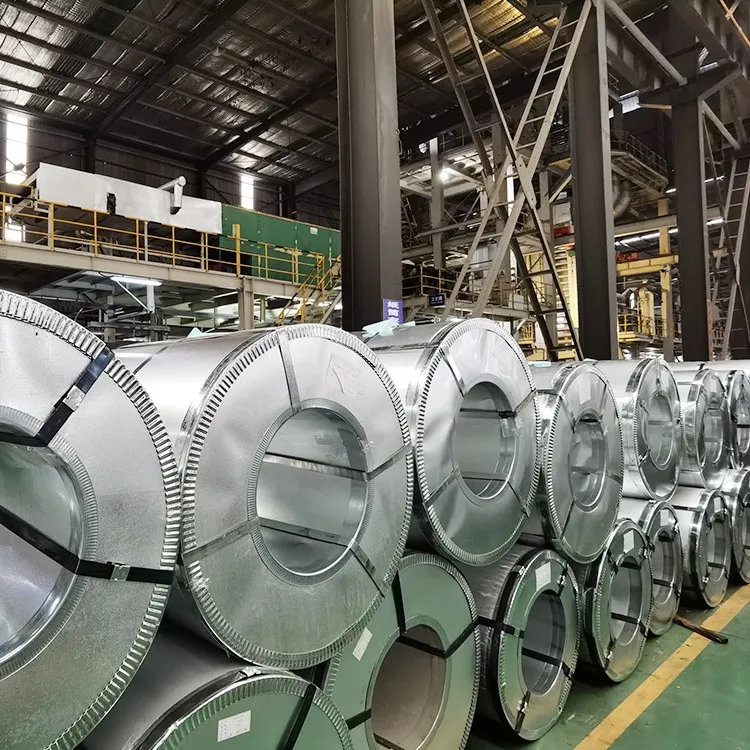
2. What are the key temperature points for galvanized coils in high-temperature environments? What specific changes occur at each temperature point?
Long-term safety threshold (≤200℃): This is the highest temperature at which galvanized coils can be used stably for a long period. At this temperature, its chemical properties and physical morphology are basically stable, with only very minor stress, which will not affect overall performance or aesthetics.
Increasing risk threshold (200℃ - 419.5℃): The zinc layer begins to oxidize and discolor at an accelerated rate, changing from silvery-white to grayish-white or dark gray. At this point, atomic diffusion and void formation begin to occur, significantly reducing corrosion resistance and adhesion.
Complete failure threshold (≥419.5℃): This is the melting point of zinc. The zinc layer melts and runs off, completely exposing the substrate steel. Above 900℃, zinc will volatilize violently and further damage the substrate, leading to the complete scrapping of the galvanized coil.
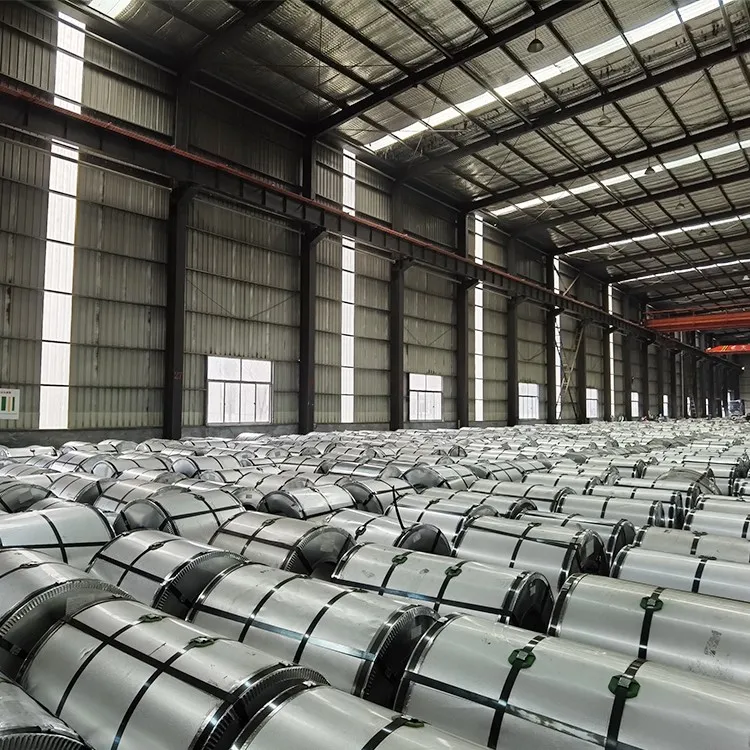
3.What is the supported service life of galvanized coils under high-temperature environments?
The service life data for galvanized coils under high-temperature environments is very clear, not a vague concept. Industry and academia have provided the following key conclusions:
200℃ is the "lifeline": International professional organizations (such as the American Galvanized Association, AGA) recommend that, to maximize corrosion protection, the maximum continuous operating temperature should not exceed 200℃.
Long-term service life estimation: When the temperature is between 200℃ and 250℃, although the anodic protection of the zinc layer weakens, the iron-zinc alloy layer diffusing from the coating can still provide corrosion protection for many years. The specific number of years depends on the remaining thickness.
250℃ is the "red line": Long-term exposure above 250℃ is extremely dangerous. It accelerates the cracking and peeling of the zinc-iron alloy layer. This means that, under these conditions, the service life of galvanized coils can hardly be estimated in "years," but rather in "months" or even "days."
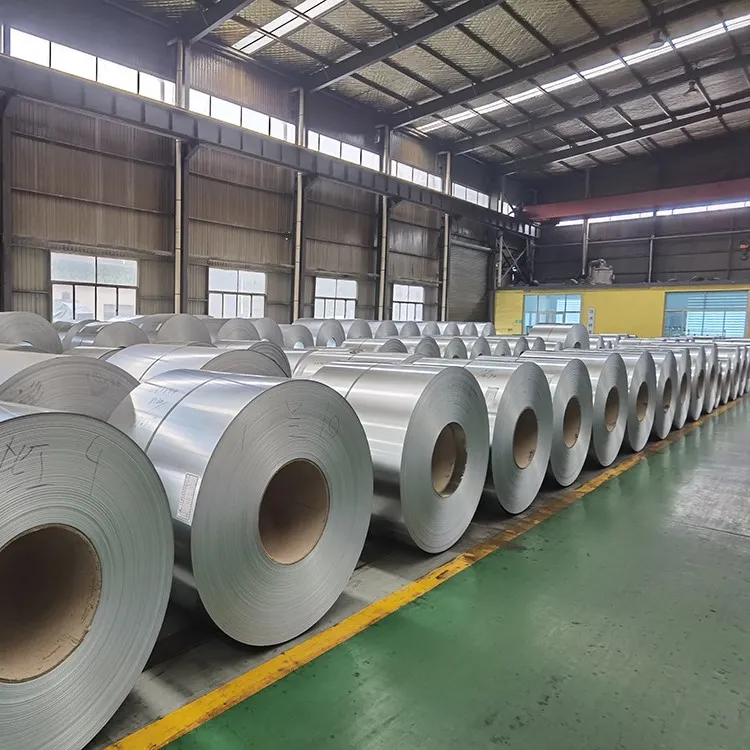
4. If use in high-temperature environments is unavoidable, what solutions can improve the high-temperature resistance of galvanized coils?
Of course, there are. If use in high-temperature environments is unavoidable, the following solutions are currently recognized as effective:
Fundamental Solution: Material Replacement: If the long-term operating temperature exceeds 300℃, the most fundamental and permanent solution is to abandon galvanized coils and directly choose materials with higher heat resistance. For example, aluminized zinc sheet can withstand environments of approximately 315℃, while aluminized sheet can withstand temperatures up to 650℃ for extended periods.
Extending the Operating Time: Increasing Coating Thickness: In the risk range of 200-300℃, a thicker coating forms a denser physical barrier. Specifically, products with a coating weight of Z275 or higher should be selected; this thicker "shield" can slow down the rate of wear at high temperatures.
Auxiliary Measures: Using High-Temperature Resistant Coatings: Applying a specially designed high-temperature resistant topcoat over the galvanized layer can effectively isolate heat and oxygen, providing the zinc layer with additional "heat insulation," such as fluorocarbon coatings or silicone coatings.
5. If galvanized coils have experienced a short period of high temperature, can the adhesion be restored after cooling?
No, it cannot be restored, and the damage is irreversible.
The "voids" and "peeling" caused by high temperatures to galvanized coils are physical structural damage to the metal. After cooling, the peeled zinc layer will not automatically re-adhere, and the decrease in adhesion is permanent. However, after experiencing short periods of high temperature such as a fire, the situation can be handled in stages:
Short-term contact (≤48 hours): Although the material can withstand short-term limits of 350-370℃, surface stress has been generated, and its use in structural applications considering peak loads is strongly discouraged.
Complete failure (extremely high temperature): If significant zinc layer peeling or discoloration of the steel substrate has been observed after a fire, a professional assessment of the steel structure's strength must be conducted before repair. This is because it may have triggered irreversible damage such as "blue brittleness" caused by prolonged high temperatures above 400℃ in the steel substrate, posing a significant safety hazard.