


1. What are the standard limits for the number of layers of galvanized coils that can be stacked?
There is no fixed number for the number of layers of galvanized coils that can be stacked. It is determined based on a combination of several actual parameters of the steel coils. According to general warehousing industry standards, the number of layers of galvanized coils should generally not exceed three, and in most cases, it is recommended to keep it within two layers. Specifically, the following core standards can be used as a reference for enterprises: For edge-cut coils or galvanized coils for household appliances, the stacking height should not exceed two layers, and the maximum storage time should not exceed three months; while the stacking of steel coils of the same specification should generally not exceed three layers. Stacking too high poses a risk of collapse due to excessive pressure on the bottom layer. In addition, the national standard GB/T 33281 requires that the storage of galvanized welded wire mesh should also follow similar zoning and anti-pressure principles to ensure that the product is not deformed or damaged due to stacking pressure.
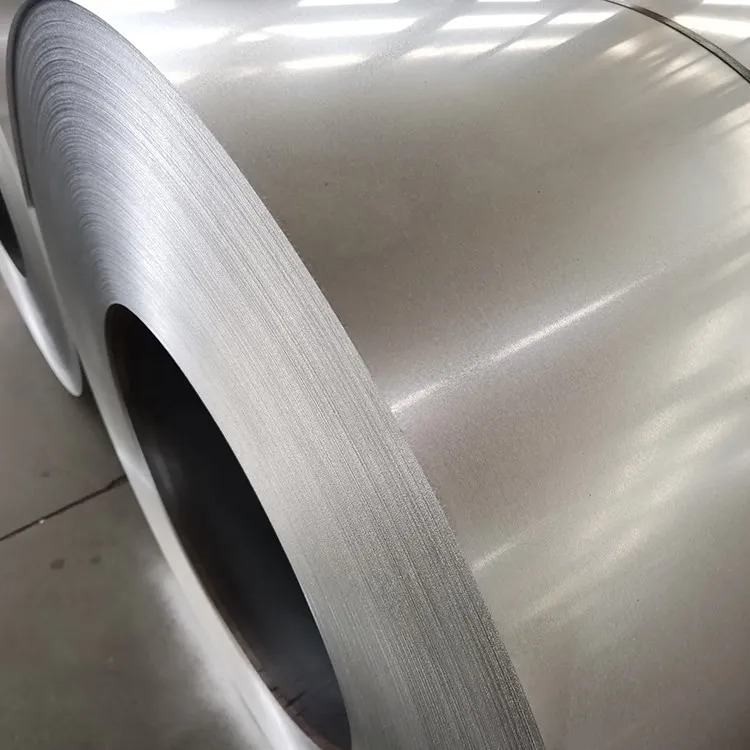
2. What factors influence the number of stacking layers?
The most crucial determining factor is the diameter of the steel coil. Industry-standard safety rules select the permissible number of stacking layers based on the outer diameter of the steel coil: when the diameter is less than 1.2 meters, a maximum of three layers are allowed; when the diameter is between 1.2 and 1.8 meters, a maximum of two layers are allowed; and when the diameter is greater than 1.8 meters, only a single layer is permitted. In addition, the following key factors must be considered: the weight of the upper coil should not exceed the weight of the lower coil, and if the thickness of the bottom coil is less than 1.0 mm, no other coil should be stacked on top of it to avoid deformation of the bottom coil due to insufficient load-bearing capacity. Ground bearing capacity, warehouse clearance height, packaging methods, and loading/unloading equipment are also important factors determining the final number of stacking layers. Following these rules is crucial to preventing collapse accidents-violation of this principle is the direct cause of approximately 70% of steel coil collapse accidents.
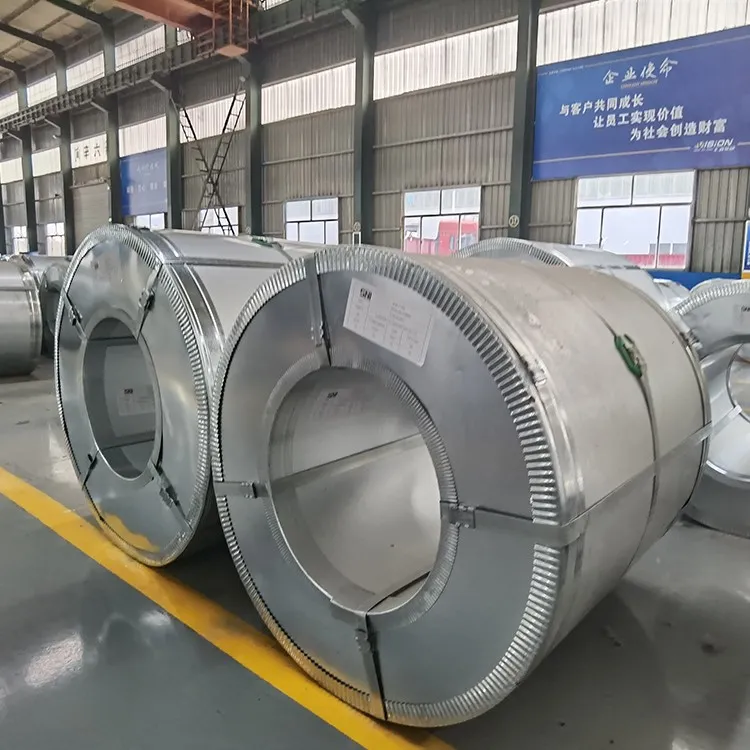
Three: What are the specific safety requirements for stacking?
When stacking galvanized coils, strict operating procedures must be followed to ensure safety and product quality. First, the bottom of all stacks must be elevated using wooden or rubber pads to prevent direct contact with the ground and moisture absorption. Sufficiently thick wooden pads should be used between each layer to evenly distribute pressure from the upper layers. Second, for multi-layer stacking, a staggered ladder arrangement is recommended (e.g., larger coils at the bottom, smaller coils at the top), with the center axis deviation of each layer controlled within 1%. Using V-shaped saddle frames and maintaining a staggered angle of approximately 30 degrees can effectively buffer lateral stress. Third, sufficient clearance should be left between each stack and adjacent stacks; the stack distance should generally not be less than 0.4 meters. Fourth, the packaging method and weight information of the goods should be clearly marked on the aisle side of the stack to help operators correctly determine the handling plan. Fifth, for overweight coils, the principle of matching weight with number of layers should be strictly followed: coils weighing less than 4 tons can be stacked up to 4 pieces, coils weighing 4 to 10 tons can be stacked up to 3 pieces, and coils weighing more than 10 tons should be stored in a single layer. Special galvanized coils and coils with special regulations should be implemented in accordance with the specific requirements.

4. What are the risks and consequences of improper stacking?
Improper over-stacking poses a series of serious risks, the consequences of which are as follows: First, overloading significantly increases the lateral stress on the bottom coil, making it highly susceptible to extrusion deformation or permanent edge curling defects. Statistics show that following proper storage standards can reduce edge curling accidents by approximately 85%. Second, internal statistics from the China Iron and Steel Association show that improper overloading of coils leads to coil center misalignment and edge indentation, directly causing batch-wide quality degradation. Third, inappropriate stacking is the most significant hazard in warehouse safety-improper stacking is the most direct cause of coil overturning and collapse accidents, potentially posing a serious threat to warehouse personnel and causing substantial property damage. Fourth, excessively high stacking can also cause the galvanized layer on the bottom coil surface to experience excessive abnormal pressure, potentially inducing partial zinc layer peeling off and affecting the product's corrosion resistance. Finally, excessive stacking makes first-in-first-out management difficult, and long-term stockpiled products are prone to damage in humid environments. Moreover, uncontrolled stacking can lead to accidents and directly endanger neighboring stacks, causing a domino effect of stack collapse and overcrowding.
5. How to correctly assess and formulate a warehouse stacking plan?
Developing a safe and efficient galvanized coil stacking plan can follow a key approach: treat warehouse planning as a systematic, cross-departmental engineering project. First, systematically review all the key parameters mentioned above, such as coil diameter, thickness, single coil weight, storage period, and ground bearing capacity, to form a basis for decision-making. Second, the warehouse management department needs to develop and compile internal galvanized coil storage operation guidelines based on local safety regulations and industry standards, combined with the characteristics of its own goods, clearly specifying details such as the maximum allowable stacking number of layers for various types of coils, the type and size of padding blocks, and aisle width. Third, adopt a management innovation based on actual conditions as the core principle in daily management. For example, dynamically verify specifications and stacking: use infrared ranging and other methods to verify the actual size and outer diameter of the steel coils before warehousing, thereby finding the optimal number of storage layers and minimizing quality problems. Only by dynamically optimizing stacking strategies in a systematic and phased manner can large and medium-sized warehouses truly achieve the long-term goals of cost reduction, efficiency improvement, and safe production.