


Galvanized Seamless Pipe
Galvanized seamless pipe starts as a solid round steel billet and ends as a zinc-coated pipe with no weld seam anywhere on its circumference. The value lies in how the two processes - seamless pipe making and hot-dip galvanizing - are controlled together. This article walks through how we produce it at GNEE STEEL's own factory, step by step, so you know exactly what stands behind every pipe we ship.
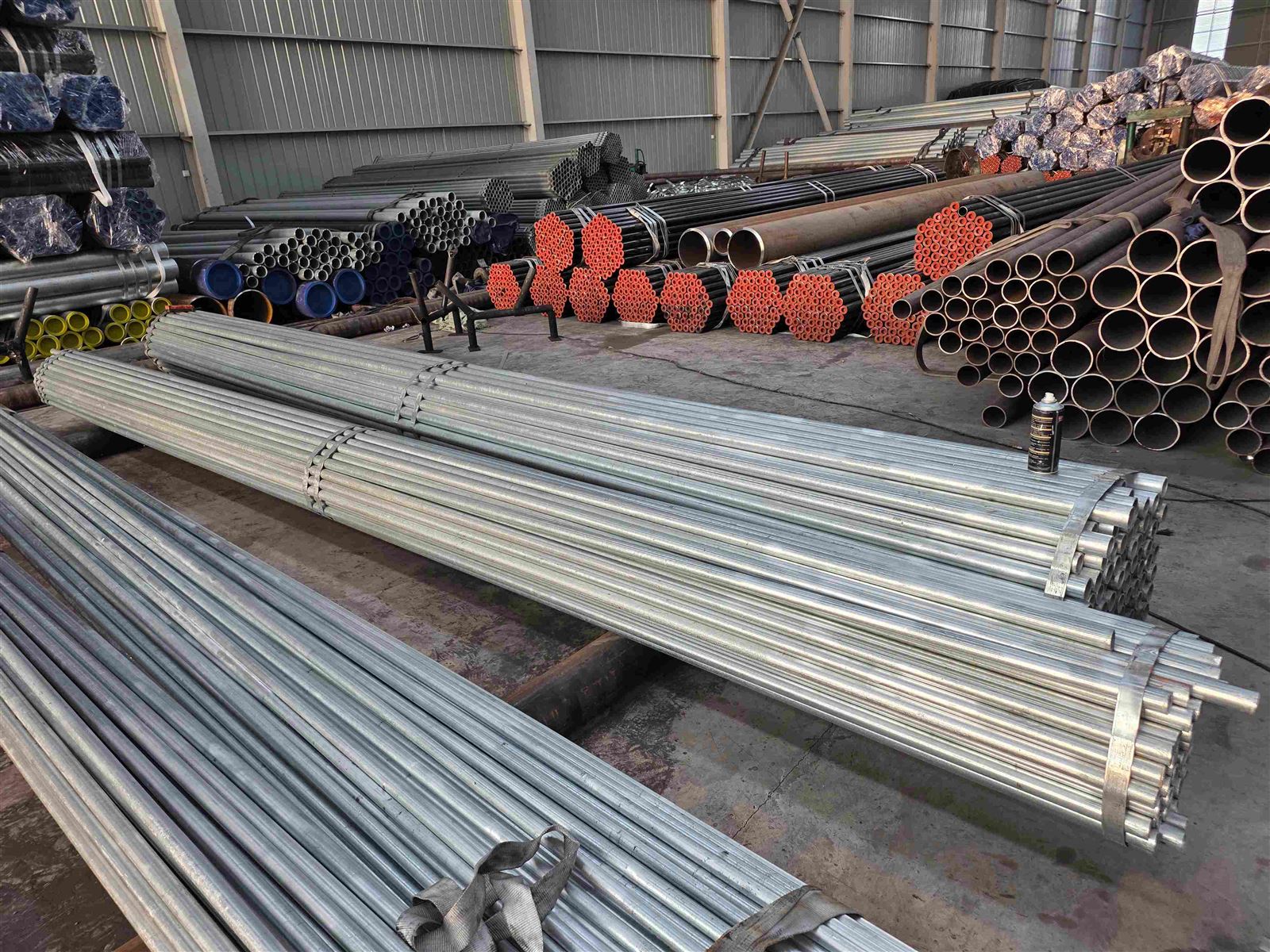
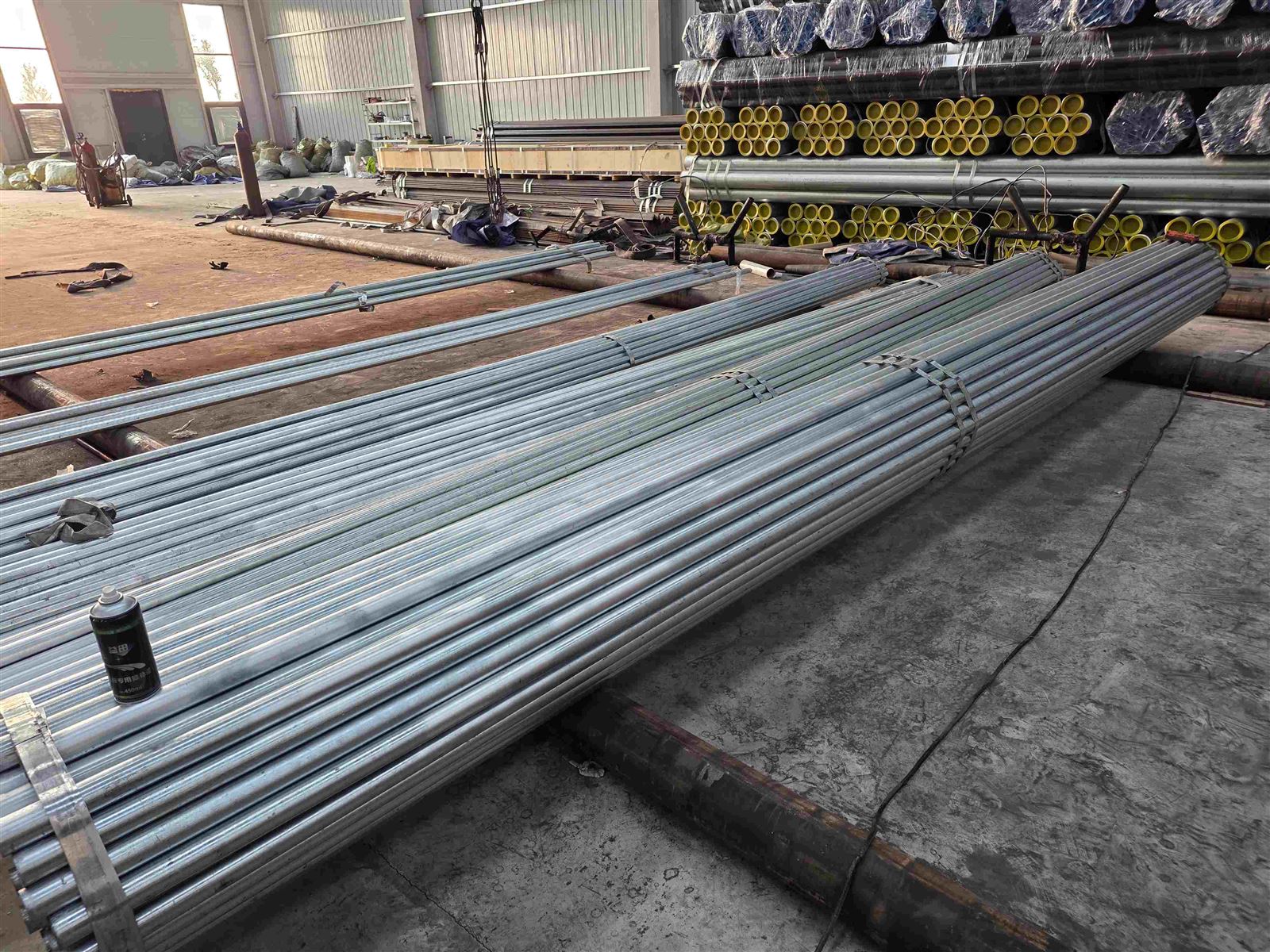
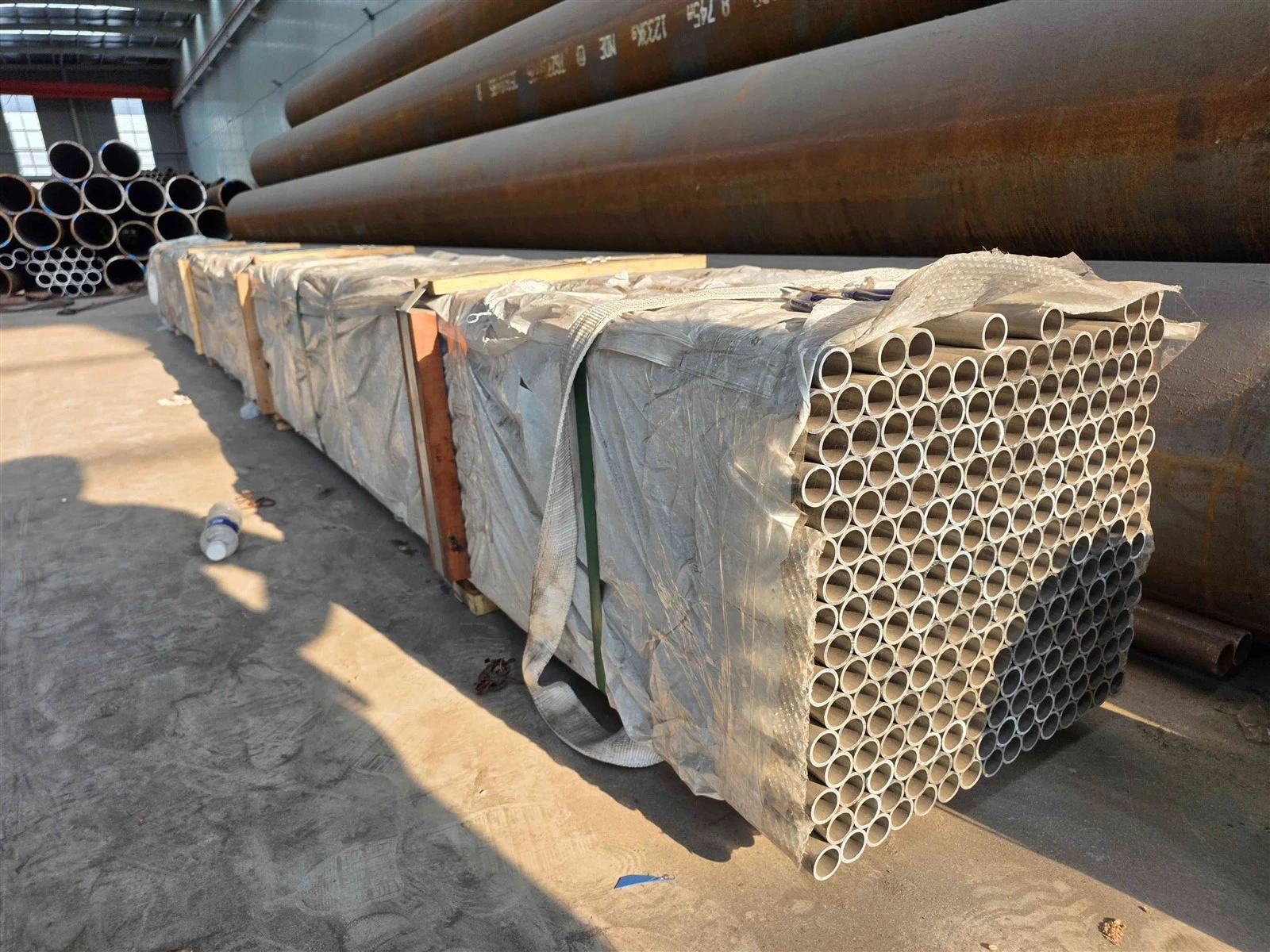
Step 1: Billet Selection and Piercing
Production begins with certified round billets, each traceable to a heat number. The billet is heated and pierced over a mandrel to create a hollow shell - this is the step that makes the pipe "seamless," because the solid steel is opened into a tube rather than rolled from strip and welded. No seam means no weld heat-affected zone, which is where welded pipes are most likely to fail under pressure or impact.
Step 2: Hot Rolling, Cold Drawing and Sizing
The shell is then hot-rolled, or cold-drawn when tighter tolerances and better surface finish are required, and sized to the customer's outer diameter and wall. Our range covers OD 21.3 – 610 mm (NPS 1/2" – 24") with walls in SCH 20 / STD / 40 / 80 / 160. Chemical composition is sampled at this stage; A106 Gr. B, for example, must carry at least 0.10% silicon for high-temperature service, while A53 Gr. B is limited to 0.30% carbon and 1.20%
manganese.
Step 3: Mechanical Testing Before Galvanizing
Every pipe is hydrostatically tested before it enters the galvanizing line, and tensile samples are cut per lot. ASTM A53 Gr. B seamless pipe must show a minimum yield of 240 MPa and a minimum tensile of 415 MPa. Dimensional checks cover diameter, wall, ovality and straightness. Pipes that fail any check never reach the zinc bath - galvanizing a defective pipe only hides the defect.
Step 4: The Hot-Dip Zinc Bath
Galvanizing runs through degreasing, pickling, fluxing, drying, immersion in molten zinc at about 450 °C, quenching and passivation. The zinc reacts metallurgically with the steel, forming zinc-iron alloy layers under an almost pure zinc outer layer, and coats both the inner and outer walls in one dip. Minimum mean thickness follows ISO 1461 / GB/T 13912 by wall group: 85 µm (≈610 g/m²) at 6 mm and above, 70 µm (≈505 g/m²) for 3 – 6 mm, and 55 µm (≈395 g/m²) for 1.5 – 3 mm. Bath temperature and dwell time are logged per charge so reactive-steel chemistry does not grow the coating out of specification.
Step 5: Final Inspection, Marking and Packing
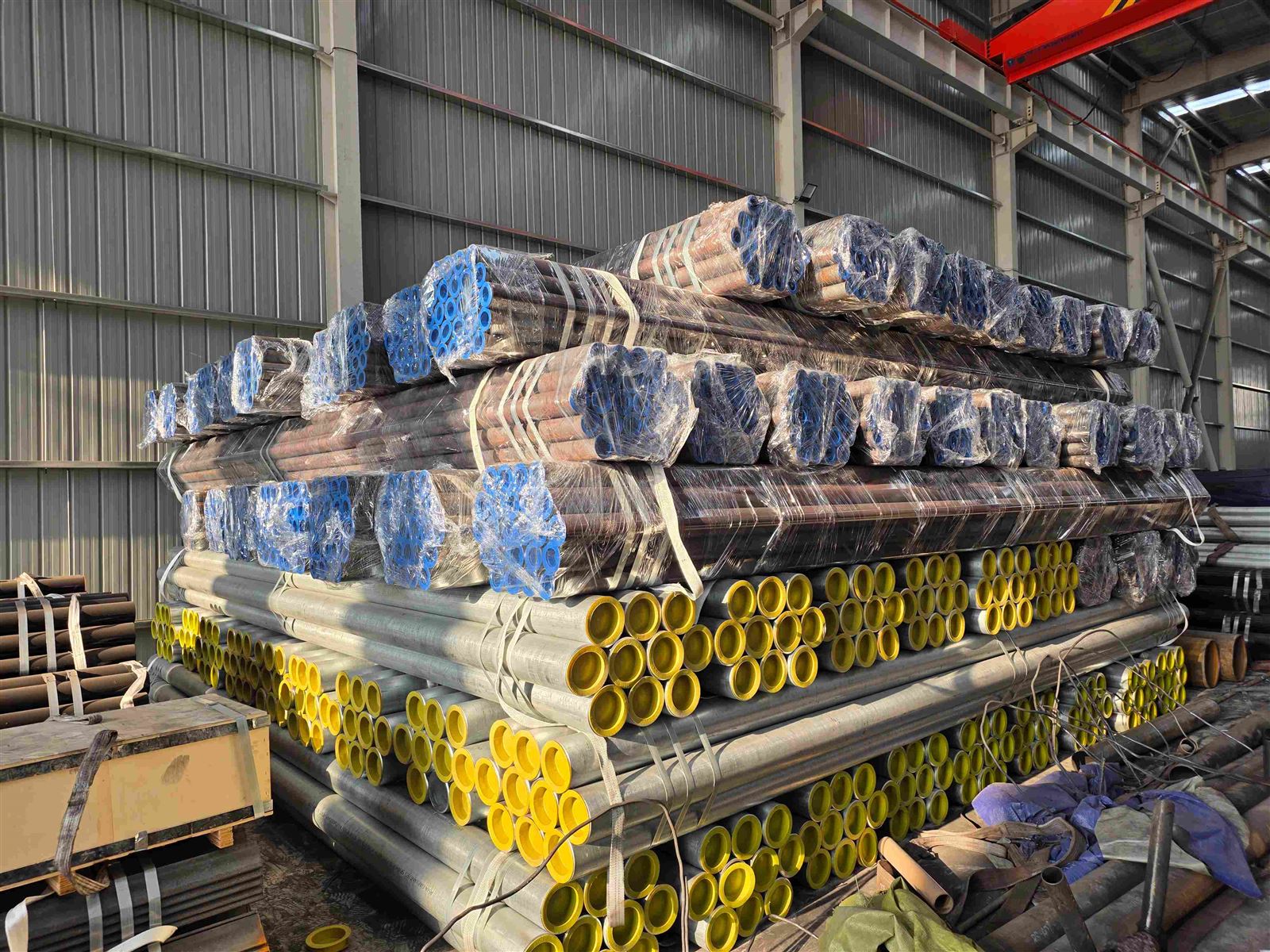
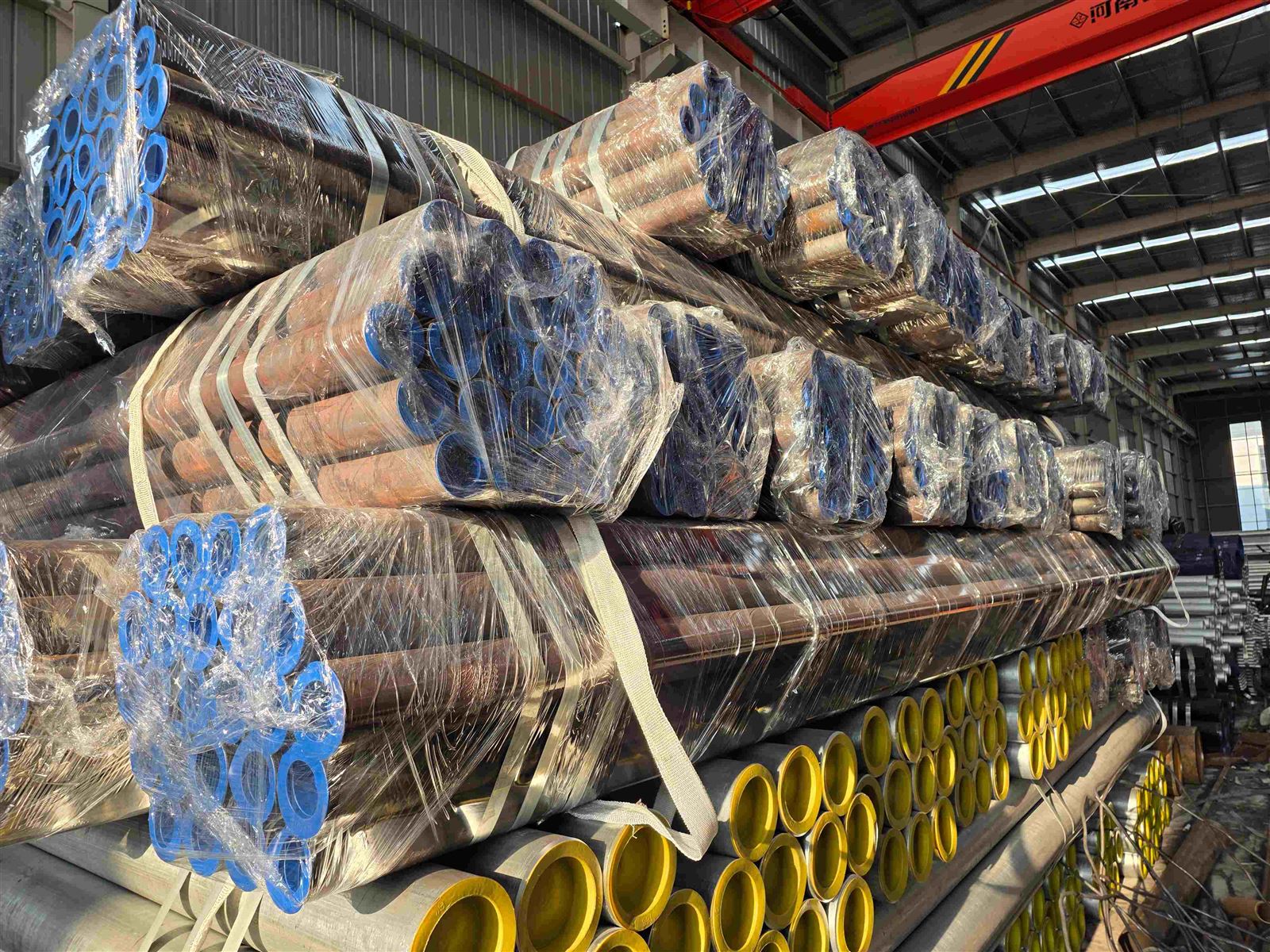
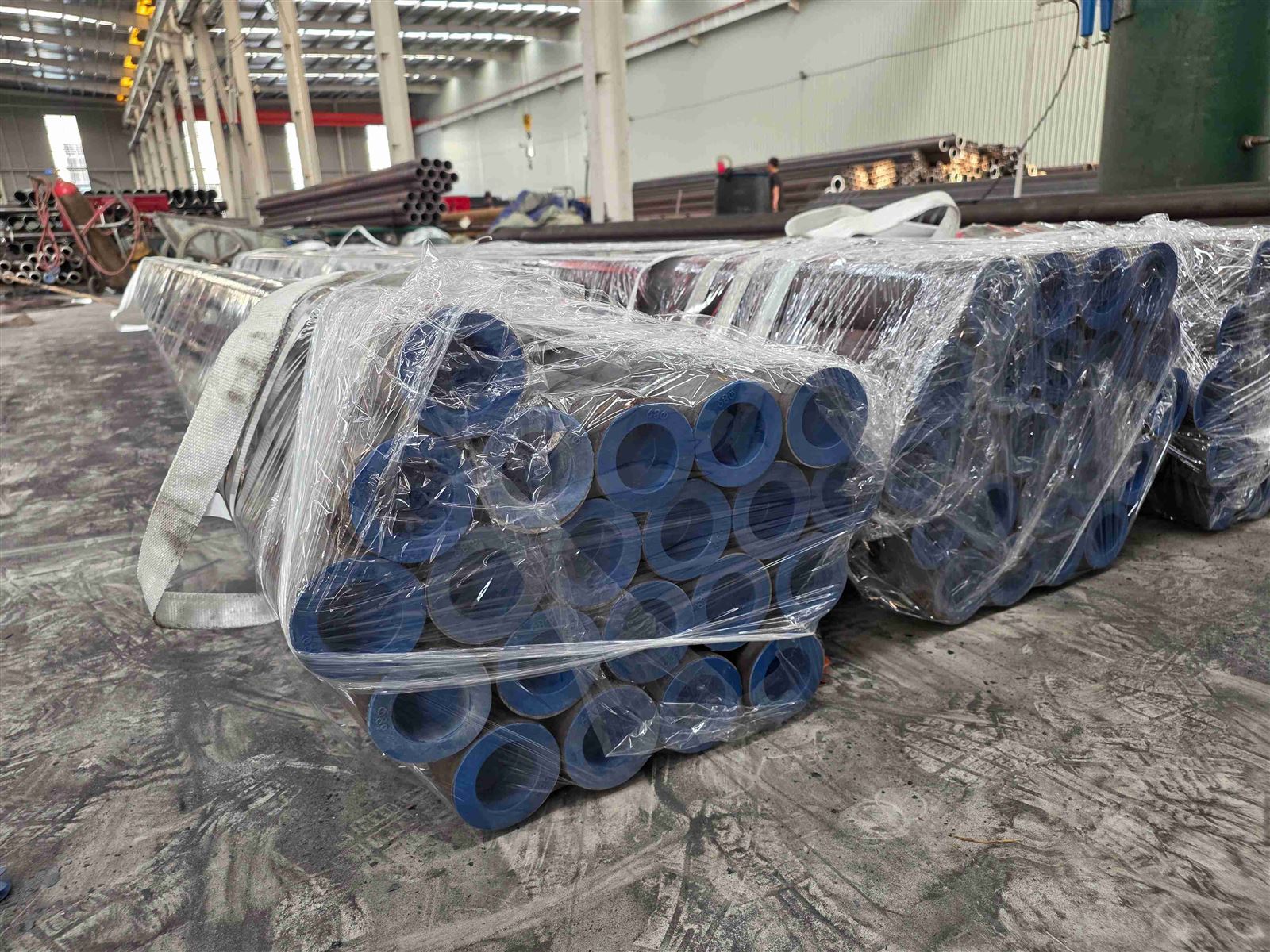
Finished pipes are inspected visually and by magnetic gauge (ISO 2178), with gravimetric reference tests (ISO 1460) to confirm coating mass. Each pipe is stenciled with the standard, grade, size and heat number, fitted with plastic end caps where specified, and bundled on wooden supports or pallets with steel strapping for sea transport. The shipment is released only when the mill certificate (EN 10204 3.1), hydrostatic records and coating thickness reports are complete and consistent.
What This Means for Buyers
1.One factory, one responsibility.
Seamless production and galvanizing are managed under the same ISO 9001 quality system; our seamless pipe facilities also comply with API Q1 and hold PED certification.
2.Independent verification.
Third-party testing through SGS, TUV and BV is available on request, and we provide SGS quality certificates with shipments.
3.Proof, not promises.
For a recent infrastructure order we produced and exported 3,432 pieces - over 1,177 tons - of hot-dip galvanized seamless pipe with galvanized caps, anchor rods and wooden boxes, delivered complete with inspection documents.
4.Visit us.
Buyers are welcome to audit the workshop and warehouse in person or by live video walk-through before placing an order.
FAQ
1.Q: Is the galvanizing done in your own plant or subcontracted?
A: In-house, so coating thickness and turnaround are controlled on the same schedule as pipe production.
2.Q: Can I get coating thicker than ISO 1461 minimums?
A: Yes - heavier coatings for coastal or industrial atmospheres can be agreed before production and confirmed on the thickness report.
3.Q: Do you mark pipes with our project number?
A: Stencil marking with customer-specified text, color bands and end-cap colors can all be arranged.
If you want to see the process yourself, send us your specification and we will arrange a factory visit or a live video inspection, together with a quotation within 24 hours.